


The promise
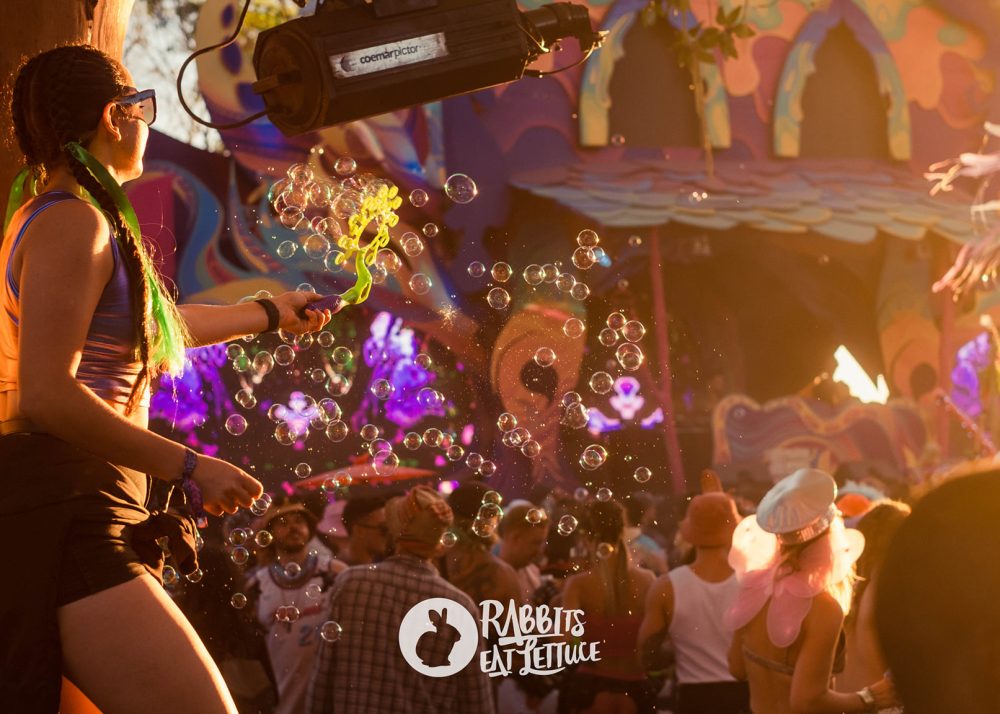
Rabbits Eat Lettuce is interesting because it still carries the scent of an underground party even while behaving like a real regional festival. It began in 2008 as a Tribal Easter party and grew into an East Coast Australian tradition with camping, dancefloors, workshops, markets, art, and the kind of returning crowd that treats the weekend as a reunion. That origin gives REL its central tension: it wants freedom and weirdness, but it also has to operate roads, rules, gates, toilets, safety, local relationships, weather, and thousands of people in the bush.
That tension is where REL becomes most interesting. REL is not the cleanest, easiest, most polished festival to explain from afar. Good. Some festivals are compelling because they are smooth. Others are compelling because they show how much effort goes into protecting a feeling. REL’s feeling is not subtle: freedom, love, dance music, camp expression, river life, handmade weirdness, and the belief that people can leave the city, decorate a patch of grass, dance until their normal selves loosen, and come back feeling more human.
The move to Bushland Hideaway sharpens REL’s identity. A riverside site near Texas, Queensland gives the festival a new physical grammar. The river becomes recovery. The gums and river oaks become shade. The long drive becomes part of the threshold. The campsite becomes part of the look. The night sky becomes part of the production. REL is not simply placing a dance party on land; it is asking the land to carry the weekend’s identity.


Camp culture sits at the centre of REL. Many festivals allow camping. Fewer make camping feel like one of the art forms. REL asks people to decorate camps with lights, flags, drapes, and personality. That may sound small, but it changes the social architecture. A good camp marker helps you find home at night. A beautiful camp invites conversation. A cluster of camps with their own glow turns a field into a neighborhood. Temporary community is built from these practical, aesthetic gestures.
Where the promise meets the ground
The style lives there too. REL fashion is a full campsite-body-river-night system: dusty boots, swim layers, costume jokes, handmade jewelry, warm sleeping layers, bunny references, glowing accessories, and clothes that can survive actual weather. The elevated version is not about looking expensive. Looking intentional still has to leave room to dance, swim, sit at camp, share food and make it back to the tent without falling apart.
The music supports that village feeling because it does not flatten into one sound. Opiuo gives REL a funky, playful bass identity. Justin Martin brings house with bounce and humor. Grouch and Triforce carry the psychedelic and progressive tunnel. Tijuana Cartel opens the live-band lane. Smaller selectors and collectives give the side stages their own story. That is a healthier festival sound than a lineup that only chases one crowd.
REL also deserves a more adult read around safety and responsibility. The festival’s rules are operating limits, not buzzkill text. No glass, no fires, no generators, no large sound systems, alcohol limits, roadside police warnings, vehicle searches, helper huts, medical support, and leave-no-trace expectations all point to the same reality: a free-feeling bush festival still has to govern freedom. A crowd that understands those limits can keep the weekend loose without letting it become careless.
REL does not become less interesting because it has rough edges. Its public information can be messy. Venue changes and permit realities are part of the recent story. Attendee chatter around dust, showers, shade, and logistics belongs in the background. Those frictions do not erase the festival’s value; they make the value more specific. REL is strongest when people understand what kind of event they are choosing. REL is a riverside doof village with proper charm, real limits and a high reward for people who arrive prepared.
Why the story still holds
There is also something valuable in how REL refuses a tidy category. It is a doof, a camping trip, a workshop weekend, a fashion playground, a regional tourism event, a river holiday, and a bass-forward dance gathering at the same time. That mix can be messy, but it gives the festival a human scale. Attendees assemble the weekend around themselves.
That is the case for covering it. REL shows how a smaller camping world can use music, art, camp design, market life, workshops, yoga, and a river to create something that feels participatory instead of consumable. The poster starts the decision. The camp makes the memory.
The official experience page points toward the broader reason REL deserves coverage: the festival is about more than standing in front of a stage. A camp becomes a culture for a few days through costumes, markets, shared rituals, recovery, mistakes, weather, strangers and the relief of not having to be too polished.
That roughness is central to REL’s appeal. REL is interesting because it lets people practice a less edited version of festival life. The result can be beautiful, chaotic, muddy, funny, generous and occasionally inconvenient; those rough edges give it more character than a polished event listing.
Continue Exploring
 Australia
Earth Frequency ’26 Survival Guide
Woodfordia has permanent amenities, but Earth Frequency remains a four-day outdoor operation. Plan arrival, weather, fire, power, safety, access and Tuesday departure.
Australia
Earth Frequency ’26 Survival Guide
Woodfordia has permanent amenities, but Earth Frequency remains a four-day outdoor operation. Plan arrival, weather, fire, power, safety, access and Tuesday departure. United States
Suwannee Hulaween ’26 Survival Guide
The useful Hulaween checklist is a set of systems: arrival, sleep, weather, water, food, navigation, access, care and departure.
United States
Suwannee Hulaween ’26 Survival Guide
The useful Hulaween checklist is a set of systems: arrival, sleep, weather, water, food, navigation, access, care and departure. Australia
Earth Frequency ’26 Inspo Guide
Frequency Village, Luminarium, performance and The Crib give Earth Frequency a second timetable. Here is how to protect time for it before the music schedule takes over.
Australia
Earth Frequency ’26 Inspo Guide
Frequency Village, Luminarium, performance and The Crib give Earth Frequency a second timetable. Here is how to protect time for it before the music schedule takes over.