


The promise
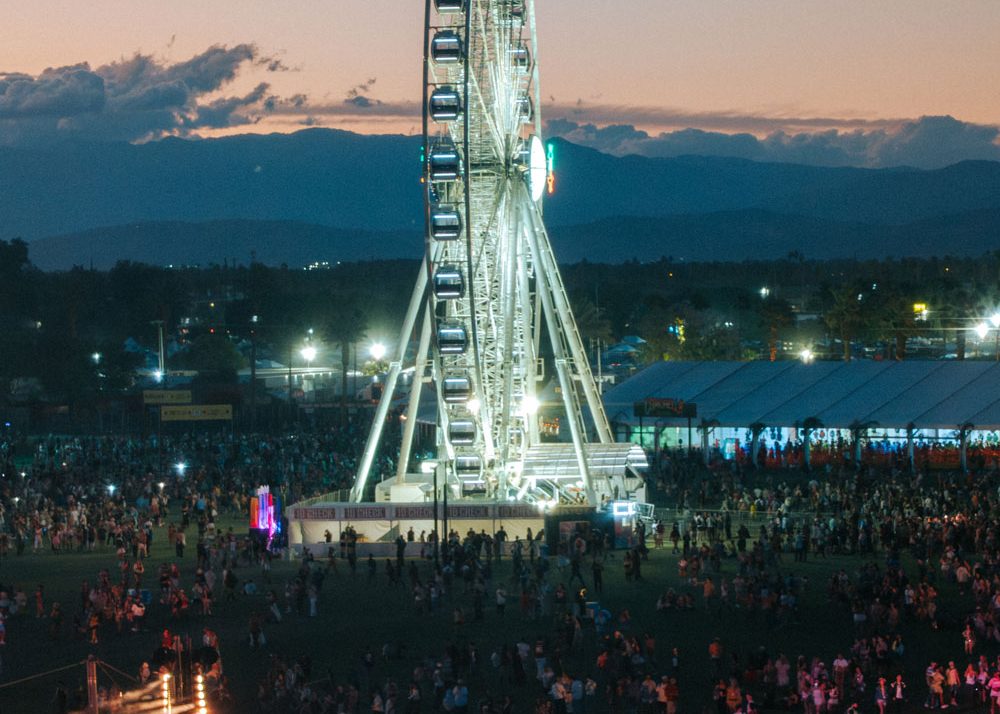
Coachella is easy to flatten into a joke: influencers, dust, wristbands, brand parties, celebrity sightings, and the annual argument about whether the lineup still creates real discovery. A sharper reading starts elsewhere. Coachella is the mirror. It shows what a festival looks like when the entire machine is turned toward visibility.
The history is part of why that mirror is so bright. Coachella began in October 1999 at the Empire Polo Club, just months after Woodstock 99 had made large-scale festivals look dangerous, cynical, and commercially broken. Goldenvoice took a risk on a desert festival built around alternative, electronic, hip-hop, and left-of-centre music, lost money, paused in 2000, and returned in April 2001. That awkward origin story is important because Coachella did not begin as a celebrity-fashion shorthand. It began as a correction to a festival industry that needed a different model.
From there, Coachella became a machine for cultural escalation: bigger stages, bigger art, bigger fashion visibility, bigger global reach, and eventually two weekends of the same lineup. The festival helped teach the American mainstream to treat a music festival as more than a concert bill. It became a place where reunions, surprise guests, art installations, desert style, and online memory all shaped the life around the music.

Visibility can make a festival feel thin. It can also reveal what people want. At Coachella, a set is rarely only a set. The weekend functions as a career statement, a fashion archive, a livestream moment, a group chat argument, a TikTok loop, a desert memory and sometimes a real musical surprise hiding under the surrounding noise.
Where the promise meets the ground
Coachella deserves coverage without pretending it is something else. Coachella is not Shambhala. Coachella is neither Bass Coast nor a small desert gathering where everyone finds each other by the same lake all weekend. Coachella is the big surface where style, access, pop ambition, sponsorship, art direction and mass attention show themselves clearly.
Purity is the wrong test for Coachella. Scale is the subject. When an event becomes this visible, the crowd becomes part of the production. Fashion becomes a language. Stage design becomes brand memory. Even the people watching from home become part of the ecosystem because the livestream turns the festival into a shared screen.
That tension is worth studying. The magazine loves the smaller, stranger, more intimate camping worlds, but those worlds do not exist outside the mainstream. Coachella helps define the outer edge of what people think a festival is. Smaller participatory festivals answer with a different promise: look at this, live inside it for a few days, then come home changed.
Authenticity is the wrong argument for Coachella. It is too easy and too tired. Coachella matters because it shows what happens when a festival becomes a global image system. The outfits are real. The brand money is real. The art is real. The music is real. The performance of being seen is also real.
Commercial scale does not erase its relevance. Commercial scale still teaches us something. Coachella shows how people use music festivals to try on identity at scale: glamorous, strange, expensive, performative, communal, curated, and sometimes surprisingly sincere. A fashion photographer can read that field with more interest than a lineup blogger because the bodies, clothes, gestures, and cameras are part of the spectacle.
Why the story still holds
Coachella also contains the contradiction between style and access. Coachella helped make festival fashion visible to the mainstream, but it also made style easier to flatten into content. The strongest approach is to look for where the visual field still has life: handmade details, risk, silhouette, movement, confidence, and clothes that do more than chase a trend cycle.
There is history here too. Coachella began as a music-forward desert festival and became a cultural platform that can launch narratives beyond the grounds. That evolution is not automatically failure. That visibility keeps the festival worth studying. When a festival becomes a mirror, every era sees itself differently in it.
For 2026, intimacy is not the test. It cannot, at least not in the way a capped camping festival can. The massive festival format still has to create discovery, style, art and moments that feel alive after the algorithm is done with them.
The art field matters too. Large-scale installations help Coachella shape the memory of the weekend, even when they also become wayfinding markers or selfie structures. A stage can blur after three days, but a lit object in the desert can become the image that holds the whole trip together.
That visual memory is why Coachella still belongs beside smaller festival favourites. It shows the high-gloss version of the same instinct: people want music to become place, clothing, image, social meaning, and a story they can carry home.
Continue Exploring
 United States
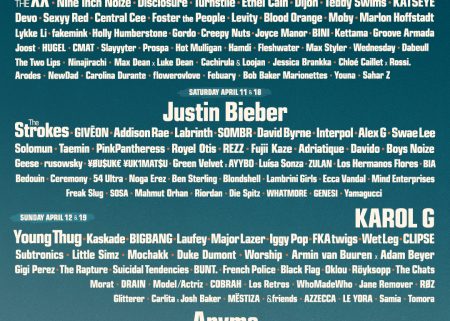
Coachella ’26 Sound Guide
A route through Coachella 2026 across pop spectacle, global fandom, electronic infrastructure, guitars and smaller-font discoveries.
United States
Coachella ’26 Sound Guide
A route through Coachella 2026 across pop spectacle, global fandom, electronic infrastructure, guitars and smaller-font discoveries.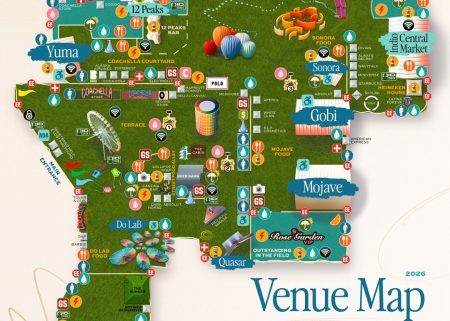 United States
Coachella ’26 Survival Guide
Coachella 2026 planning for desert heat, dust, walking, shuttles, camping, traffic, functional outfits, food, money and group recovery.
United States
Coachella ’26 Survival Guide
Coachella 2026 planning for desert heat, dust, walking, shuttles, camping, traffic, functional outfits, food, money and group recovery. Australia
Earth Frequency ’26 Survival Guide
Woodfordia has permanent amenities, but Earth Frequency remains a four-day outdoor operation. Plan arrival, weather, fire, power, safety, access and Tuesday departure.
Australia
Earth Frequency ’26 Survival Guide
Woodfordia has permanent amenities, but Earth Frequency remains a four-day outdoor operation. Plan arrival, weather, fire, power, safety, access and Tuesday departure.