


The 2026 edition
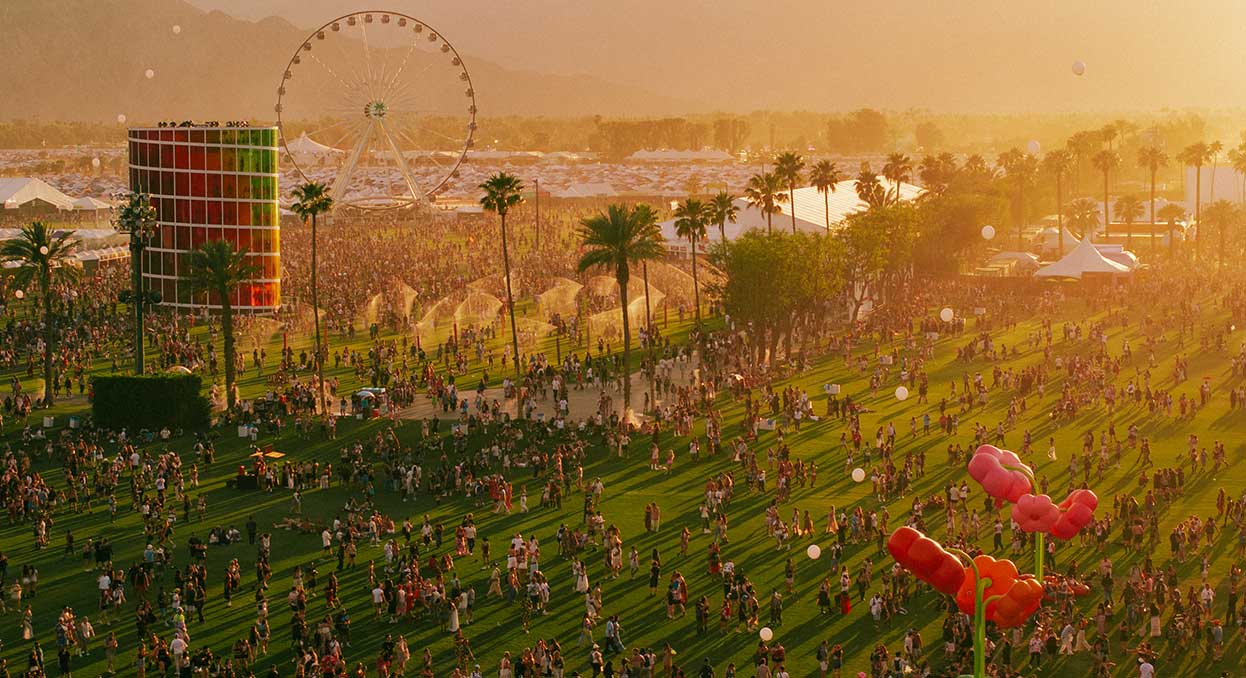
Coachella takes over the Empire Polo Club in Indio, California for two April weekends. In 2026, the festival is scheduled for April 10-12 and April 17-19, with both weekends built around the same broad festival world: music, large-scale art, camping, hotel packages, shuttles, food, merch, livestream reach, and the kind of crowd style that turns the field into its own runway.
Coachella is not the model for an intimate camping festival. Its value lies elsewhere. It shows what festival life becomes when everything is visible: the headliner economy, the fit check, the livestream, the art landmark, the influencer orbit, and the need to arrive with a whole identity already styled.
The 2026 edition already has a strong cultural shape. Sabrina Carpenter, Justin Bieber, and Karol G gave the top line a pop-and-global centre, with Karol G carrying a Latina headliner moment at the top of the bill. The art program gave the field more than stage-to-stage movement; Coachella’s art installations are part of the navigation system and part of the memory. People remember where they met, which structure served as a meeting point and what the desert looked like when the lights came on.

How the festival takes shape
Coachella belongs in the festival calendar even when it sits outside the deeper camping-festival lane. It shapes the surface of the festival economy – style, spectacle, access, online conversation, and what a festival can do for an artist’s public mythology. It also gives readers a revealing contrast: a festival can be culturally powerful without being intimate, and a festival can be visually thrilling while still demanding serious desert planning.
Coachella is worth covering because it turns the festival field into a public mirror. The clothes, camera lines, brand activations, art commissions, campgrounds, VIP borders, livestream edits, and after-hours mythology all show how music becomes image. That does not make it less real. It makes it more revealing.
The two-weekend format also leaves two records of the same edition. Weather, surprise appearances, crowd behaviour and online attention shift even when the broad production remains fixed. Looking back at 2026 means separating the official program from the clips, guest moments and headlines that came to define each weekend. The second weekend also tests which moments had staying power once the first wave of coverage passed.
The 2026 Coachella story separates into two versions. There is the internet Coachella: outfits, celebrity sightings, influencer churn, surprise guests, and arguments about whether the festival still has edge. Then there is the attendee Coachella: heat, walking, shuttle timing, dust, schedule conflicts, water, phone battery, camp neighbours, and the strange pleasure of seeing a massive cultural machine from the inside.
That split defines the weekend. Style is not shallow here, and a poster never explains the whole weekend. Coachella is one of the few festivals where a single outfit can become a cultural signal and a single set can become an online event for people who never touched the grass.
What matters on the ground
Coachella works as invitation and warning at the same time: go for the music, yes, but understand the scale. Build your weekend around the official schedule, the art installations, the camping or hotel route, and the reality that moving across the site takes time. Coachella rewards people who arrive with curiosity and a plan.
Coachella is not a cheap impulse. Passes, camping, hotels, shuttles, lockers, parking and add-ons can turn one festival decision into a full travel budget. The desert fantasy works better when the numbers are settled early and the plan leaves room for food, transport, shade and an inevitable schedule change.
Coachella also makes room to treat fashion as serious editorial material. The field is a runway because people use clothing to announce taste, tribe, ambition, humor, sexuality, wealth, irony, and courage. Some looks are pure content. Some are genuinely great. The value is knowing the difference and still enjoying the spectacle.
The desert machine can still create real memories when readers arrive with the right expectations: fewer frantic crossings, enough water, a realistic budget, and room for a set, art piece, or outfit they did not plan around.
That room for surprise is what keeps Coachella from becoming only a content calendar.
Continue Exploring
 Australia
Earth Frequency ’26 Sound Guide
A listener-first route through Earth Frequency’s current psychedelic, club, bass, funk and live programme—corrected for the latest lineup change and honest about the missing timetable.
Australia
Earth Frequency ’26 Sound Guide
A listener-first route through Earth Frequency’s current psychedelic, club, bass, funk and live programme—corrected for the latest lineup change and honest about the missing timetable. United States
Suwannee Hulaween ’26 Sound Guide
The 2026 bill is too mixed to reduce to headliners. A better route follows live improvisation, electronic scale, rhythm and the collaborations that blur those categories.
United States
Suwannee Hulaween ’26 Sound Guide
The 2026 bill is too mixed to reduce to headliners. A better route follows live improvisation, electronic scale, rhythm and the collaborations that blur those categories.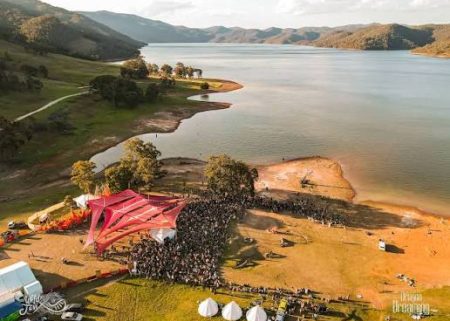 Australia
How Dragon Dreaming Found Its Place
From a Canberra call for contributors to a lakeside home at Wee Jasper, Dragon Dreaming’s history reveals how an unusual festival learns to belong without becoming ordinary.
Australia
How Dragon Dreaming Found Its Place
From a Canberra call for contributors to a lakeside home at Wee Jasper, Dragon Dreaming’s history reveals how an unusual festival learns to belong without becoming ordinary.