


Read the lineup by feel
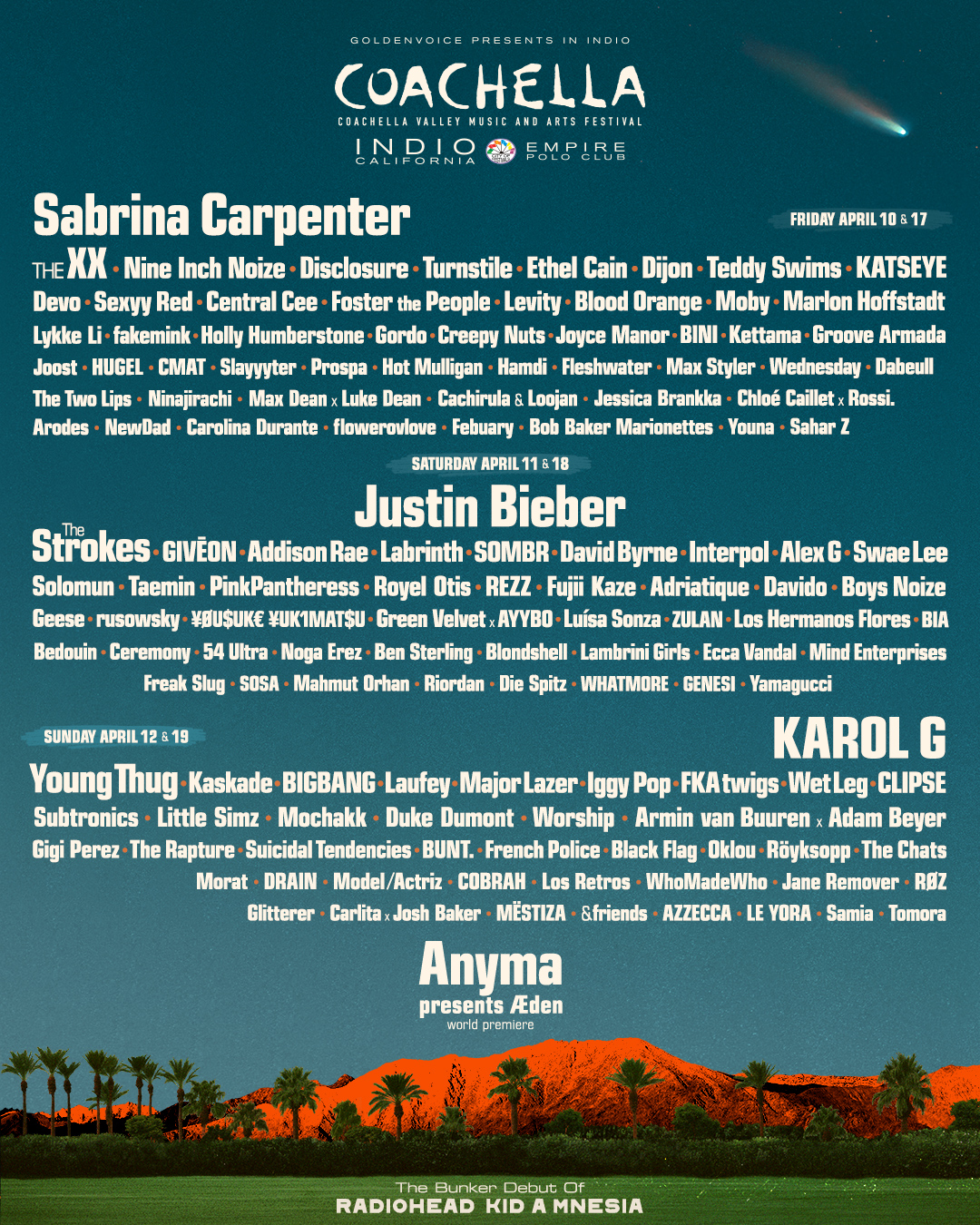
A Coachella lineup is never only a list of artists. It is a map of what can hold a field, travel through a livestream, become a social clip, and still work for the person walking into a tent because the bassline sounded better than their plan.
| If you want… | Start listening for… | Possible 2026 entry points |
|---|---|---|
| Pop spectacle | Big hooks, visual staging, crowd-wide recognition, headline mythology | Sabrina Carpenter, Justin Bieber, Karol G |
| Global-pop lift | Spanish-language pop, diasporic fandom, big-colour stage language | Karol G and the wider international poster lanes |
| Electronic scale | House, techno, live electronic, late-night tent focus, desert-club momentum | Sahara, Yuma, Quasar, Outdoor Theatre, after-dark livestream replays |
| Band and legacy voltage | Guitars, catalog memory, reunion energy, rock-club grit on a massive field | Iggy Pop, Wet Leg, Turnstile, David Byrne, Interpol, Nine Inch Nails x Boys Noize |
| Discovery | Smaller-font artists, daytime surprise, genre edges, sets people talk about after | Sonora, Gobi, Mojave, Yuma, Do LaB-style wandering |
The pop read is obvious, but it is still worth naming. Sabrina Carpenter moving from a 2024 afternoon slot into a 2026 headline lane is the kind of Coachella arc people track because the festival can turn career momentum into a public ritual. Justin Bieber’s billed-headliner moment works the same way, pairing star power with the question of what a massive festival stage lets an artist reset or reframe.
Karol G is the highlight because the set sits where music, fashion, colour, cultural representation, and crowd release all meet. Coachella has always been a place where global scenes become visible to people who were not looking for them. Karol G’s headline slot changes how the weekend reads before anyone considers the rest of the billing. It changes who gets imagined at the centre of the field.


Build a listening route
The electronic path is the other essential read. Coachella is not a bass-camp festival, but its electronic programming teaches people how to move between pop-scale spectacle and club-scale focus. House and disco-threaded sets offer the clearest groove route. Darker tent programming carries the intensity route. Live electronic and sunset programming give the weekend room to breathe without turning the poster into homework.
A Coachella listening route resists the easy headline game. The poster is huge, and the internet will already rank the names. The practical move is building a listening route through pop spectacle, electronic release, global discovery, indie nostalgia, hip-hop presence, and the quieter names that become the reason people brag later that they were there.
Start with the headliners and major-font acts as anchors, not as homework. Pick the names that shape your nights, then leave room for daytime discovery and tent sets that do not have to serve the whole internet. A stronger Coachella route moves between the obvious cultural moment and the smaller set that feels like a personal find.
The electronic route deserves special care because Coachella often turns club music into scale. Yuma-style programming, Sahara-style spectacle, live electronic sets, disco-threaded dance music, and darker late-night tent choices are different experiences. The route starts by asking what the set is for: groove, lift, visuals, body heat, nostalgia, or a proper reset after too much pop-scale glare.
The strongest picks favour groove, funk, playful party craft, stylish performance, and sets with enough body to make the desert move. At Coachella, that does not mean ignoring pop. It means reading pop and dance together: who brings fashion, who brings choreography, who brings a room, who brings a surprise, and who actually gives the crowd somewhere to go emotionally.
Let the setting change the plan
A good route uses contrast. Pair one massive cultural set with one dance tent, one global or Latin route, one live-band route, and one artist you know almost nothing about. Coachella can feel overdetermined from the outside, but the best attendee stories often come from a set that was not part of the content plan.
The Do LaB and dance-adjacent routes also matter because they keep Coachella from feeling too polished. Surprise guests, smaller-stage electronic discoveries, and tent moments give the weekend a little looseness inside a massive machine. If the main stages are the public story, the electronic side can be where the body remembers why it came.
Hip-hop, Latin, K-pop, indie, legacy rock, and global pop routes need the same respect. Coachella’s biggest value is contrast: a reader can watch a giant cultural headline set, then drift into a smaller tent and find a song that feels more personal than the livestream moment. Use the official 2026 lineup archive and official schedule records before committing to a route.
A practical listening route pairs one massive field moment with one dance route, one guitar or live-band route, one global-pop route, and one discovery set. That keeps the weekend from turning into a checklist and makes room for the kind of story a person actually wants to remember.
That last discovery lane is often where Coachella still feels alive. The huge names pull the crowd, but the smaller route gives the weekend texture after the headline clip has already moved on.
Continue Exploring
 Australia
Earth Frequency ’26 Sound Guide
A listener-first route through Earth Frequency’s current psychedelic, club, bass, funk and live programme—corrected for the latest lineup change and honest about the missing timetable.
Australia
Earth Frequency ’26 Sound Guide
A listener-first route through Earth Frequency’s current psychedelic, club, bass, funk and live programme—corrected for the latest lineup change and honest about the missing timetable. United States
Suwannee Hulaween ’26 Sound Guide
The 2026 bill is too mixed to reduce to headliners. A better route follows live improvisation, electronic scale, rhythm and the collaborations that blur those categories.
United States
Suwannee Hulaween ’26 Sound Guide
The 2026 bill is too mixed to reduce to headliners. A better route follows live improvisation, electronic scale, rhythm and the collaborations that blur those categories.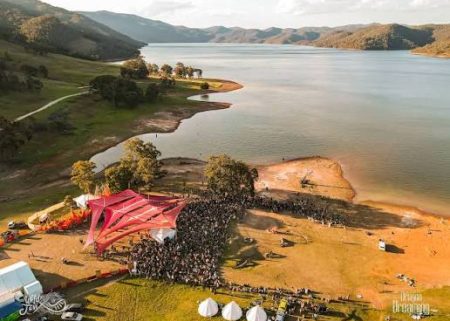 Australia
How Dragon Dreaming Found Its Place
From a Canberra call for contributors to a lakeside home at Wee Jasper, Dragon Dreaming’s history reveals how an unusual festival learns to belong without becoming ordinary.
Australia
How Dragon Dreaming Found Its Place
From a Canberra call for contributors to a lakeside home at Wee Jasper, Dragon Dreaming’s history reveals how an unusual festival learns to belong without becoming ordinary.