


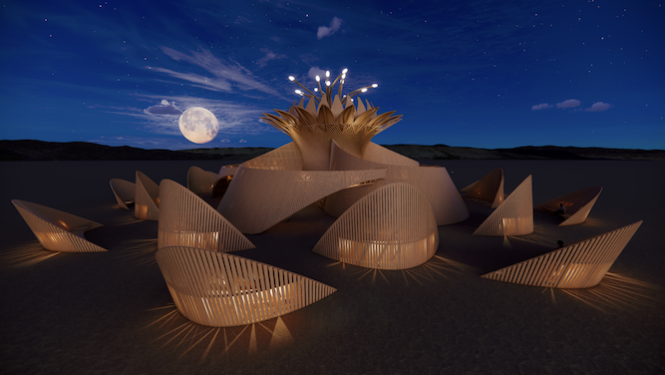
Burning Man is easy to misunderstand when it is reduced to pretty photos on the playa. The true story is a temporary city trying to protect an anti-commercial ideal while paying for permits and toilets. Medical capacity, art support, and staff add another difficult layer. Public-land compliance and volatile weather add their own demands. Its 2026 theme, Axis Mundi, brings the centre and its connections to the foreground. Start with the machinery that lets the ritual happen at all.
The promise has a budget
The organisation’s public financial reporting supplies the context without turning this into a balance-sheet recap. Decommodification does not remove costs; it changes how the costs are carried. Higher ticket tiers and donations meet one part of the need. Staff and contractors carry another part. Volunteers, artists, camp crews, and participants carry the rest in different ways.
Where the ideal becomes practical
The 10 Principles still give Burning Man its vocabulary: inclusion and gifting, then self-reliance and communal effort. Civic responsibility and Leave No Trace close the loop. Their force lies in the practical demands they create. Self-reliance means you cover your own water, shade, and transport, or you collectively do so for your group. It also means a camp that does not collapse in wind. Communal effort means the city’s life is made through crews and contributions. Decommodification means a striking absence of ordinary commerce, not an absence of expense.


The 2026 art programme makes the same point at a larger scale. Burning Man has announced 75 Honoraria projects and $1.3 million in direct grants, while the art listings point toward hundreds of planned installations. Cryptomeria asks people to move through the central pavilion. The Temple of the Moon asks for a different form of participation: care and memorial practice, quiet, and boundaries around grief. Art is not spectacle added after the fact. It is built and funded. Then it is placed, maintained, and eventually removed.
Care exposes the same pressure. The Zendo Project has said it will not provide its specialized peer-support service in 2026, citing the cost and scale of the work. Burning Man still lists Rangers and Emergency Services. Crisis intervention and survivor advocacy remain part of the map. Care systems do exist. Specialized care still needs funding, trained people, and an operating home even in a culture built around gifting.
That distinction changes the reading of participation. Some forms are visible: bringing an art car, wearing a finished costume, or arriving at the burn. Others are easier to miss: building a shade structure, staffing a medical station, hauling grey water, checking a neighbour’s tie-down, or doing the final MOOP sweep when everyone is tired. The city asks for both, even though one photographs better than the other.
The price of a city is distributed
The ticket ladder is only the beginning. One participant may fly into Reno, rent a vehicle, buy shade hardware, join a camp, take unpaid time away from work, and return to a week of cleaning gear. Another may share transport, borrow equipment, arrive with a veteran crew, or pay more for a camp with established infrastructure. Both may pass through the same Gate. Their capacity to weather a dust storm, sleep, and recover can be very different.
That unevenness does not prove bad faith. It does explain why the language of radical inclusion needs material scrutiny. A culture can sincerely reject VIP zones while still reflecting unequal access to money, time, tools, and established networks. The pointed question is whether the city keeps widening the routes into participation or leaves the hardest costs to those least able to absorb them.
There is also a difference between visible service and invisible subsidy. A camp might gift coffee, offer a ride, or run a class. It may simply provide a safe place to sit. Behind each gift are shopping lists and fuel plans. Transport and shift work need a plan. Cleanup and somebody’s ability to front the cost do too. That labour can be generous and freely offered. Naming it does not cheapen the gift.
A public number such as an Honoraria grant needs context. Money can start a build, but it does not automatically cover fabrication and transport. Insurance and storage require a plan as well. Crew meals, tool failure, and strike do too. The same is true for a well-run camp. A budget helps, while competence, time, and the ability to absorb a bad week still decide what becomes possible.
The lasting appeal of Burning Man lies partly in that reality. Many systems that remain hidden at a conventional event become visible on the playa. Someone packed the water. Someone knows the repair. Someone can sit with a stranger, while someone else carries the last bag of trash. The answer shifts from camp to camp, but the question does not: who does what, where is it needed, and who is willing and able to do it?
Access is part of the cost
A ticket price is only one number in the trip. Travel, vehicle access, camp dues, water, food, shade, equipment, time away from work, and the capacity to recover afterward determine who can arrive comfortable, who arrives at the edge, and who cannot make the trip at all. Burning Man’s access programmes recognize part of that reality. They do not make the material difference disappear.
Watch 2026 without either worship or a cynical victory lap. The city’s ideals become clearest when they are difficult to maintain: when weather turns, a camp has to carry its own waste, an artist has to make a build work, or a participant needs support. A higher-priced ticket helping subsidize a lower one belongs in that same picture. The tension is part of the culture’s real test.
The 2026 edition will still produce its familiar visual mythology. Read beyond the images. Follow the survival rules, then the art builds and current ticket language. Notice the care systems that remain in place. A temporary city can feel utopian for a week. The harder question is who keeps the idea standing once the work arrives.
More festival coverage from Sparked Magazine
Festival guides, sound guides, survival guides and reported features from Sparked Magazine.


Continue Exploring
 United States
Suwannee Hulaween ’26 Inspo Guide
Hulaween’s art and participatory program work best when readers reserve time for them before the schedule turns every path into a shortcut.
United States
Suwannee Hulaween ’26 Inspo Guide
Hulaween’s art and participatory program work best when readers reserve time for them before the schedule turns every path into a shortcut. Australia
Earth Frequency ’26 Inspo Guide
Frequency Village, Luminarium, performance and The Crib give Earth Frequency a second timetable. Here is how to protect time for it before the music schedule takes over.
Australia
Earth Frequency ’26 Inspo Guide
Frequency Village, Luminarium, performance and The Crib give Earth Frequency a second timetable. Here is how to protect time for it before the music schedule takes over.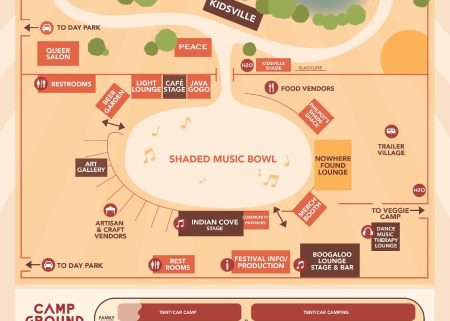 United States
Joshua Tree Fall ’26 Survival Guide
The practical JTMF plan: understand walk-in camping, build wind-ready shade, pack for the nighttime drop and verify the desert conditions that matter.
United States
Joshua Tree Fall ’26 Survival Guide
The practical JTMF plan: understand walk-in camping, build wind-ready shade, pack for the nighttime drop and verify the desert conditions that matter.