


After the rain stopped falling at Sonic Springs on Saturday morning, straw had been spread over the muddy stretches of trail at the Fisher’s Paradise Campground. It was a small thing to admire at a festival with details such as beautifully built stages and lasers reaching across the river at night, but it stayed with me. Someone had seen the muddy paths and decided to make it better to travel for the attendees.
When I interviewed founder and festival director Drez Slezak afterwards, I asked who had done it. I expected the name of a crew member.
“Honestly, that was me going around with my logistics team,” he said.


He had learned from the previous year, when he and Katt Brooks, his wife and fellow co-founder, spent hours covering muddy ground after a much fiercer storm. Rain had visited every edition. Now there were bales available through an arrangement with River & Sky, the other festival community with deep roots at the venue. Experience had become preparation.
That answer brought the whole weekend into focus for me. The person imagining the festival was also out tending to it.
Sonic Springs held its fifth edition this year from August 13 to 17 at Fishers’ Paradise near Field, Ontario. I had attended its first two editions and missed the next two, making this my first visit to the new location. I came away feeling that a lot of work was coming together. Drez, looking at the same weekend from the other side, felt similarly- that his original vision was truly coming together.
A feeling worth bringing home
I understand the impulse that started this. When I first discovered festivals, I felt as though the top of my head had been blown off. People had made a temporary world that I wanted to live inside forever.
For Drez, a formative version of that experience was Envision. He was born in Costa Rica and returned there often. At the festival, he and Katt found something that suited them both: the music he loved, yoga teachers she wanted to see, art, nature and a whole day of possibilities between them.
They began travelling to events with Sonic Yoga, pairing his DJing with her teaching. They were participants and contributors before they were festival organizers. Back in Paisley, where he grew up, Drez kept making a promise to a friend.
“I’m going to throw a festival in Paisley one day.”
Eventually, a suitable campground and the right relationships made the idea possible. He wanted a small Ontario counterpart to Envision, somewhere his own community could encounter an experience they might otherwise have to travel a very long way to find. Marriage and the prospect of a family made having it closer to home more important.
Envision is my favourite festival, too. I love the humid warmth, the jungle opening onto the beach, the beauty and care in its stage designs. Learning that it had inspired Sonic Springs helped me recognize the ambition here. Drez was trying to bring home a feeling he knew, while making something that belonged to the people around him.
The family part became tangible during our interview when Katt brought him their baby. We remembered the child getting involved with the microphone during the opening ceremony. Drez counted that among his favourite moments of the weekend. He spoke about wanting families to participate in what fulfilled the parents, instead of always separating the two worlds.
Katt curates and manages wellness at Temple, Serenity and the Community Talks Stage. Her programming deserves its own share of the praise. Each time I passed Temple, it was packed with people. One yoga morning, the participants stretched well beyond the shade of the large stretch tent and into full sun. They still wanted to take part. It was great to see that kind of interest in what she had put together.
Those full sessions made the connection between Sonic Yoga and Sonic Springs tangible for me. Katt was giving people a reason to gather in the morning as compelling as the music would be later. Someone could come for the dancing, someone else for the workshops and wellness, and both could find plenty to keep them there.
A shared place to begin
The opening ceremony made those connections visible. Before everyone dispersed into their own festival, there was a chance to see the people who had made it possible and hear what mattered to them. Crews, volunteers, artists, venue hosts and the land all entered the conversation. Jesse Buck, the founder of Chocolate Groove, introduced himself and encouraged people to meet one another rather than remain strangers passing between stages.
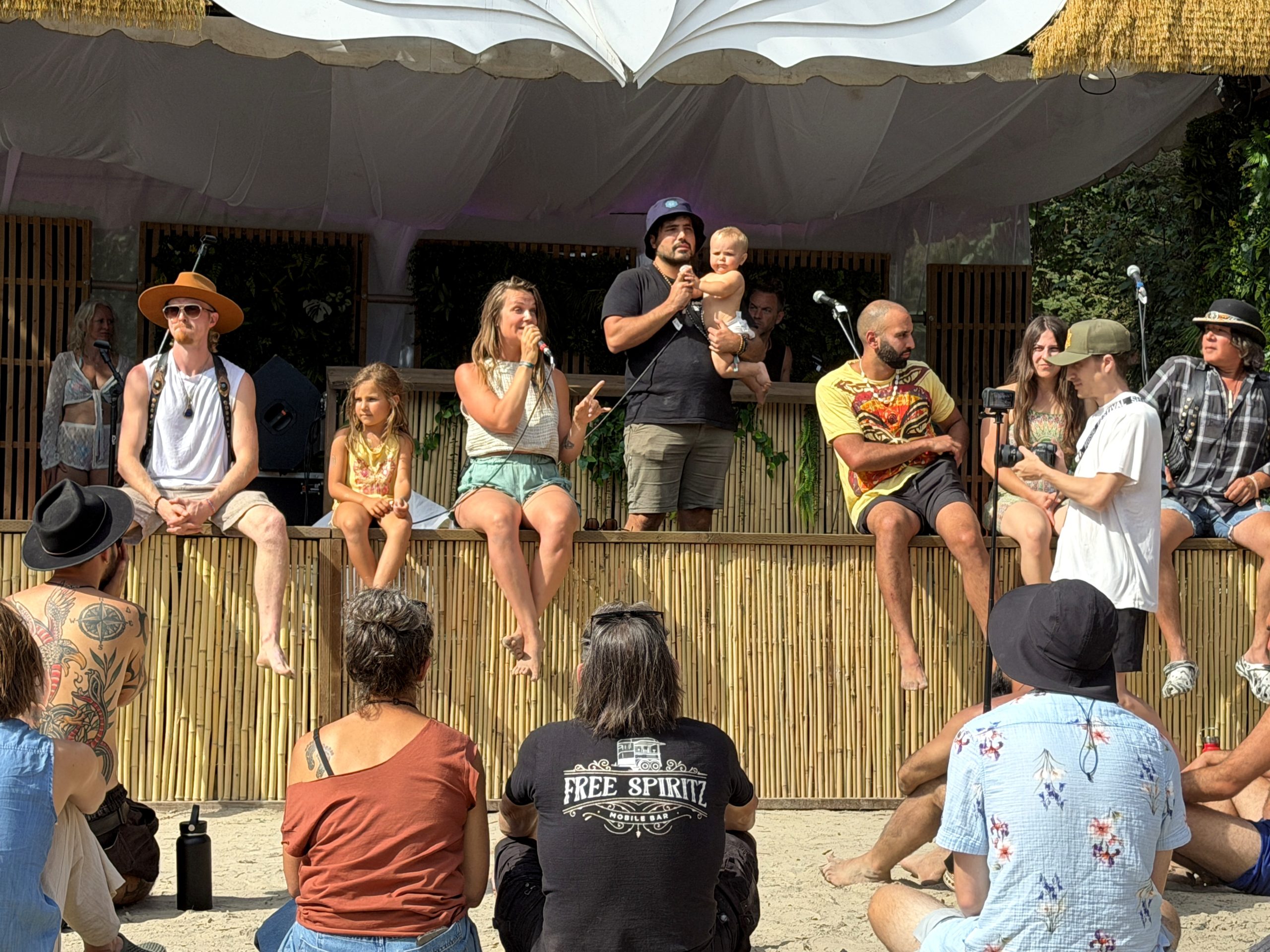
Mike Milewiski, one of the original partners of Sonic Springs, put a thought into words that I have carried away from many festivals:
“I think the coolest thing about a festival is this weekend will never happen again.”
He went on to describe how everyone present changed the gathering simply by being there. I liked hearing that at the beginning, while we still had the weekend ahead of us. It made participation feel immediate.
Roianakens Martin, the Indigenous guest who opens the ceremony each year, took that attention somewhere deeper. He began by asking us to use his whole name. He was reclaiming it, and he wanted people to try, even imperfectly, rather than shorten it for their convenience.
Later, discussing our relationship with the land, he asked:
“How do you know what you’re walking upon?”
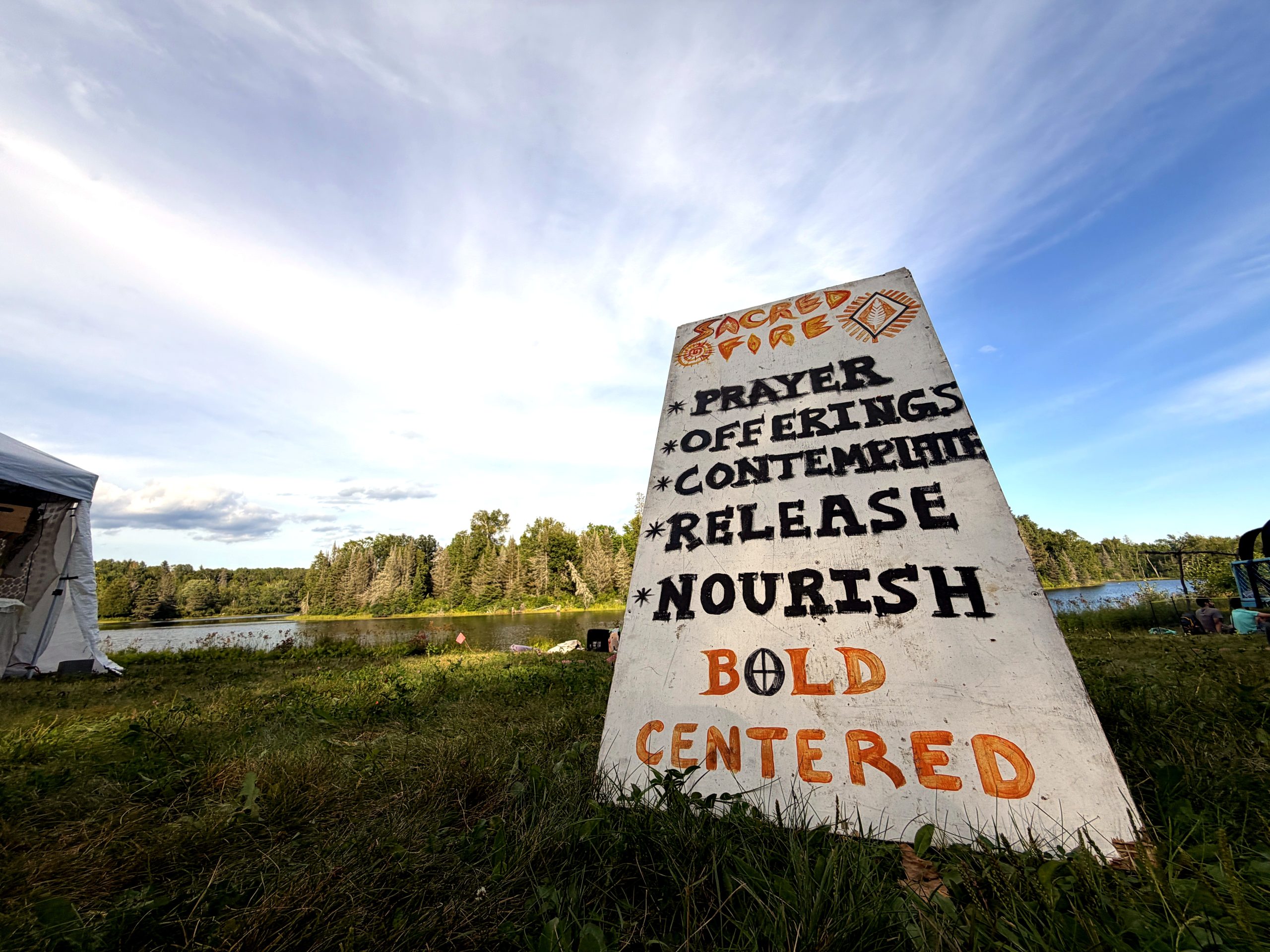
His address asked us to consider the lives and relationships beneath the surface of a place. He spoke about turtles, habitat and a wider living world that a human-centred acknowledgement could overlook. He also described the heart fire as somewhere people could bring sadness, joy, conversation or silence. There was room to arrive as you were.
I found that approach moving because it gave me something to do with the acknowledgement. Listen properly to another person’s name. Pay attention to what is already living here. Consider what your presence changes. He also spoke about the difficulty of living consistently with our principles, without treating that difficulty as permission to stop trying.
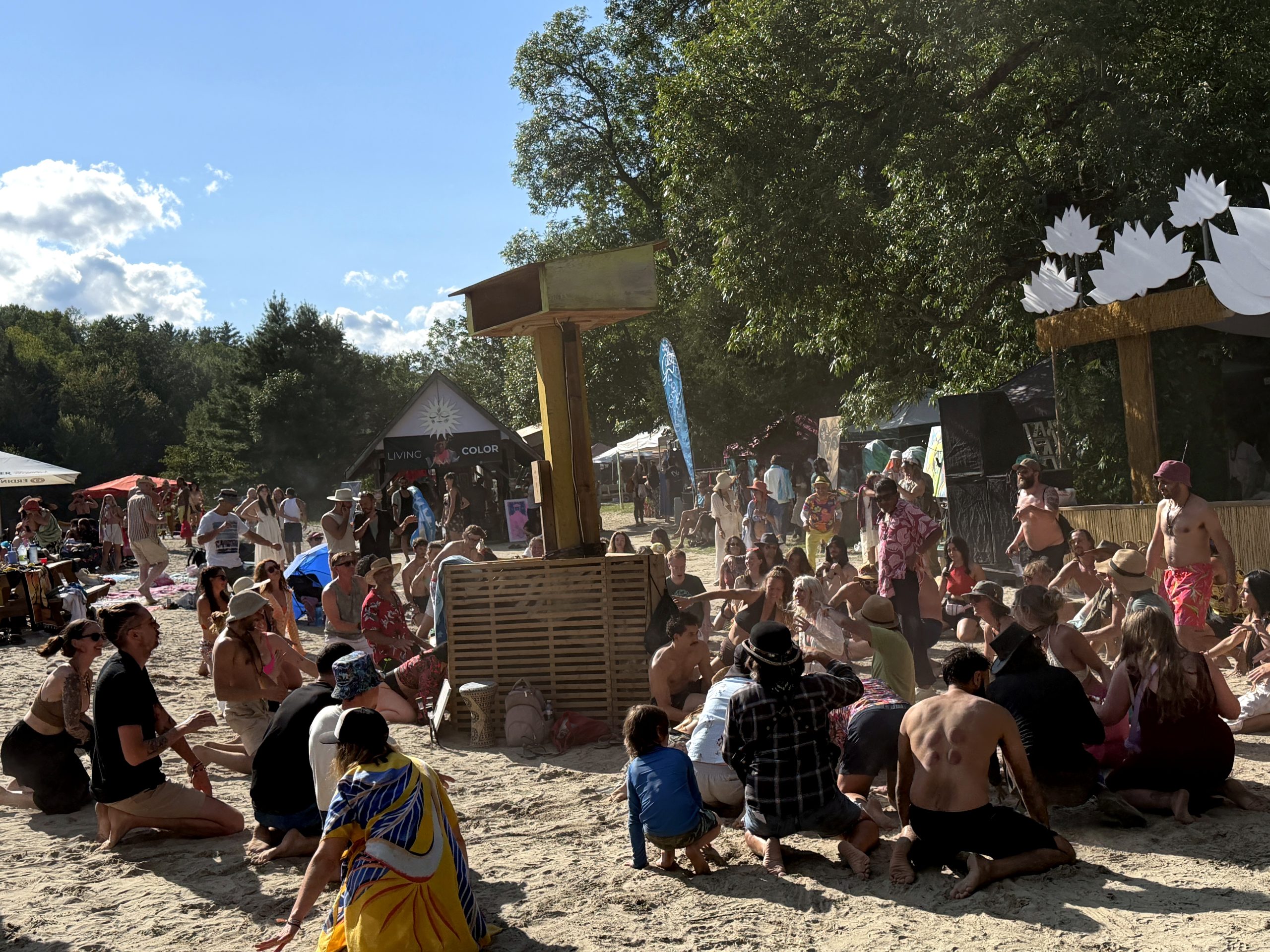
This was his invitation to this gathering, and I appreciated its generosity. Smaller festivals can make a shared beginning easier to find, although Katie Crosgrey later reminded me that the Grove opening ceremony at Shambhala serves a similar purpose for a 20,000 person festival there as well. The important part is making the beginning matter.
When I asked Drez what community creation meant in practical terms, he answered quite literally.
“Well, it literally takes a village to make it happen. And we’re also literally making a village for the weekend.”
He included technicians and safety teams, artists and volunteers, but also the people who dance, dress up, return and encourage someone else to open up. Over the weekend, I kept encountering examples of what he meant.
The stages found their places
Luna was one of them. The smaller stage was beautifully crafted, and after dark its construction and lighting made it a pleasure to look at. I enjoyed spending time there. The music sounded excellent, and the setting held my attention instead of merely framing whoever was playing.
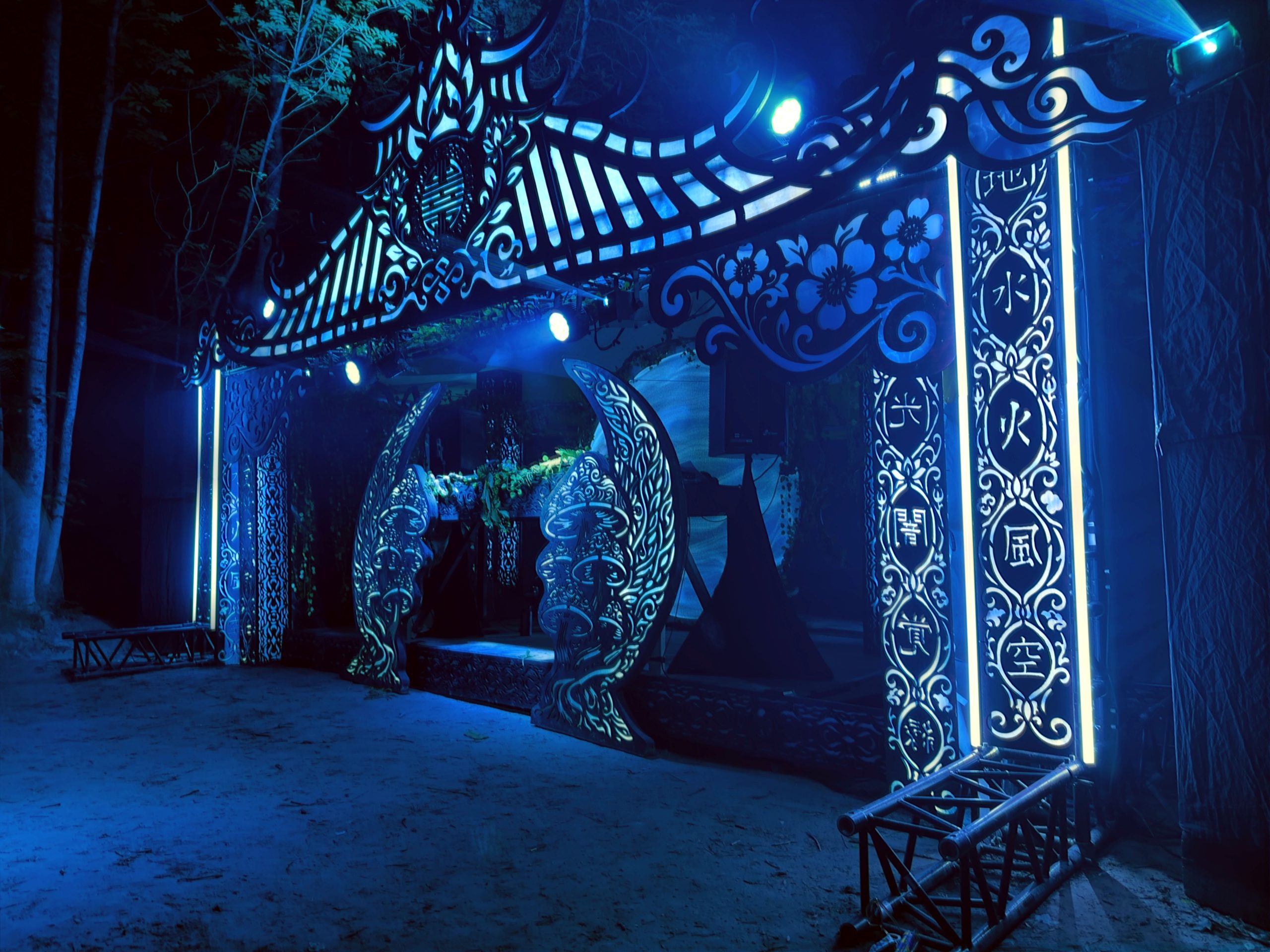
Drez explained that Temple and Luna had been combined the previous year, partly because so many people were spending their time at the beach. The arrangement had not felt quite right. Returning them to separate spaces, and moving Luna closer to the beach stage, Lotus, made it easier to move between different musical moods. Attendee feedback had helped inform that decision.
Temple gained a stretch tent supplied by Anas Attia, founder of Soulshine Festival, which gave the space a different character from the conventional event tent used before. Temple’s stage design came from Mattie Fisher, whose work has been part of Sonic Springs since its second edition. The festival has continued using that design across different stages, giving an early contribution a lasting place as the event evolves. Fisher also created the centrepiece behind the Lotus DJ booth, helping shape the visual identity of both the wellness space and the main dance floor. Co-producer Jesse Buck handled Temple’s sound, lighting and production through Unity Productions, while its décor drew on several contributors.
Luna’s design came from Aetheral Alchemy, a team based in British Columbia and Quebec and led by William Prince-Dufort: who built the pagoda element roughly 48 hours after the crew returned from their production work at Shambhala. When I asked Drez which investment over the weekend had made the biggest difference, Luna was his answer.
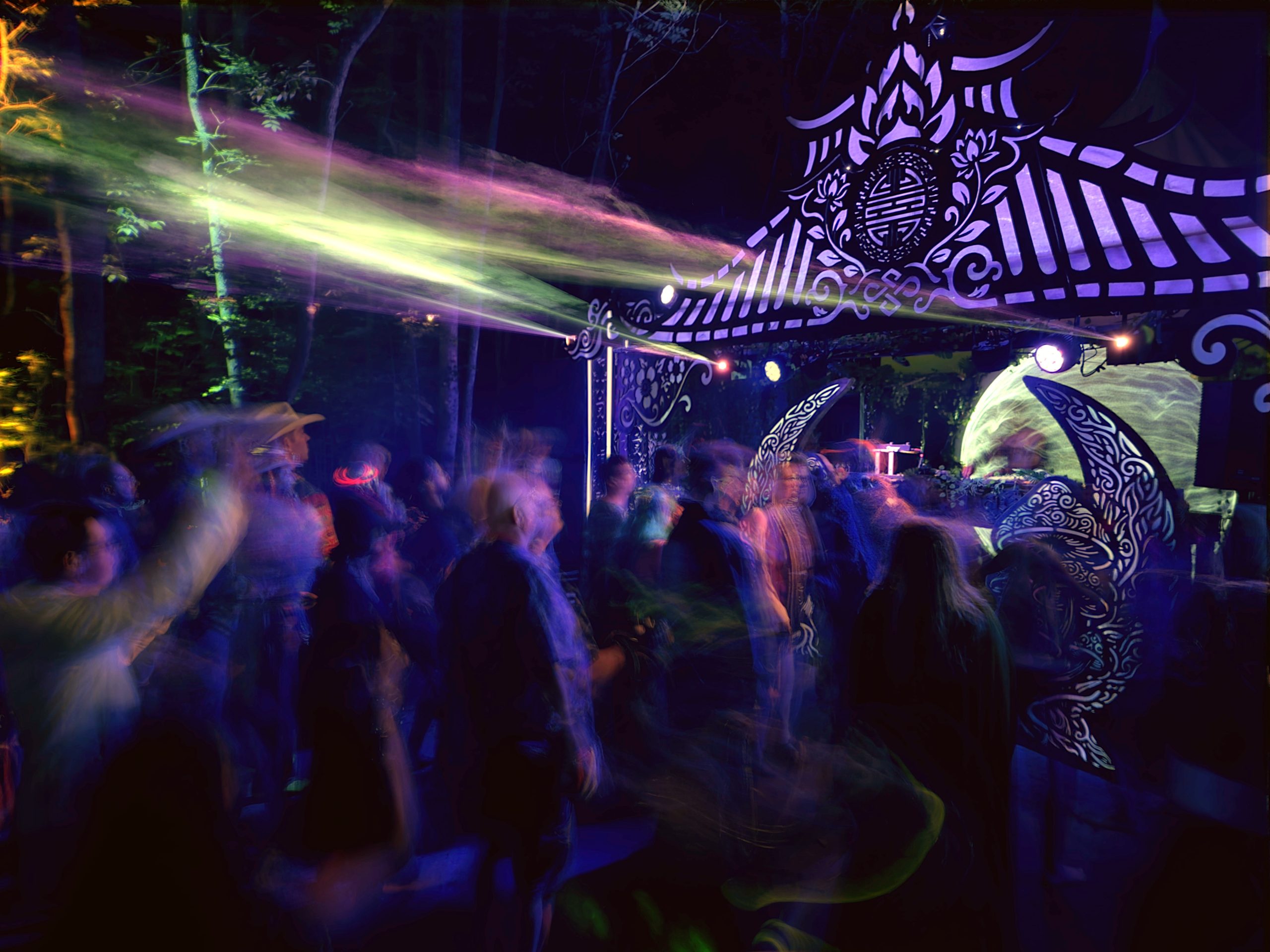
Drez did not describe year five as a sudden reinvention. He talked about refinement: crews becoming used to one another, systems making more sense, and the audience arriving with a clearer idea of what it was part of. That matched the impression I brought home. The festival felt more complete, with individual decisions beginning to reinforce one another.
The sound was a separate contribution. alienInFlux Sound System provided and managed KV2 systems for both Luna and Lotus, bringing three audio technicians this year. Drez valued the accumulated understanding of a team that had worked with the festival from the beginning. He wanted those relationships to deepen, rather than swap crews whenever somebody offered a different rig.
Lotus’s stage design and production were handled by Marshall McMahon / MTL.OTT Productions. The company also brought Lotus’s lighting and lasers, plus some of Luna’s lighting and laser production. John Early returned for his second year as the stage’s manager and MC.
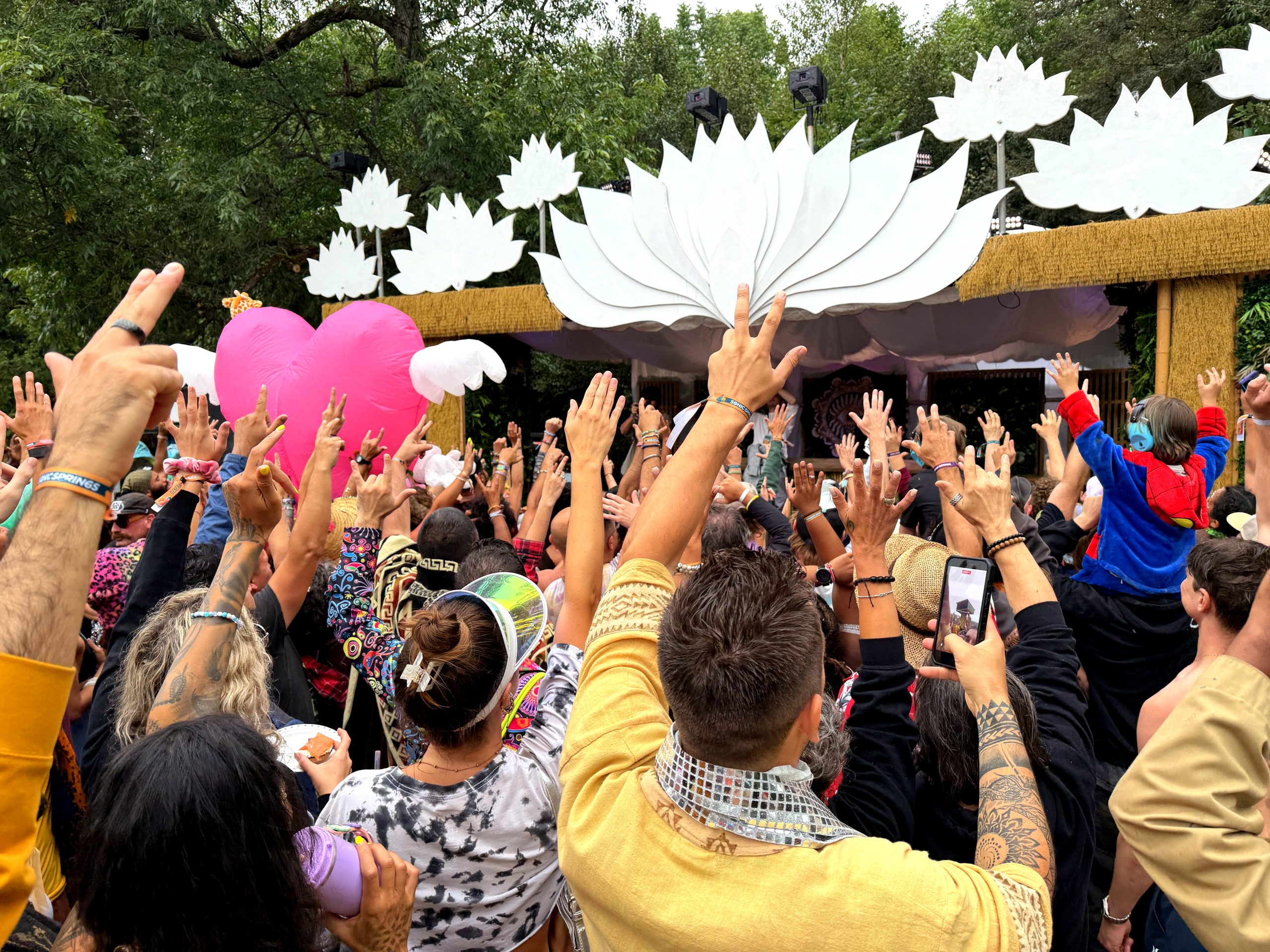
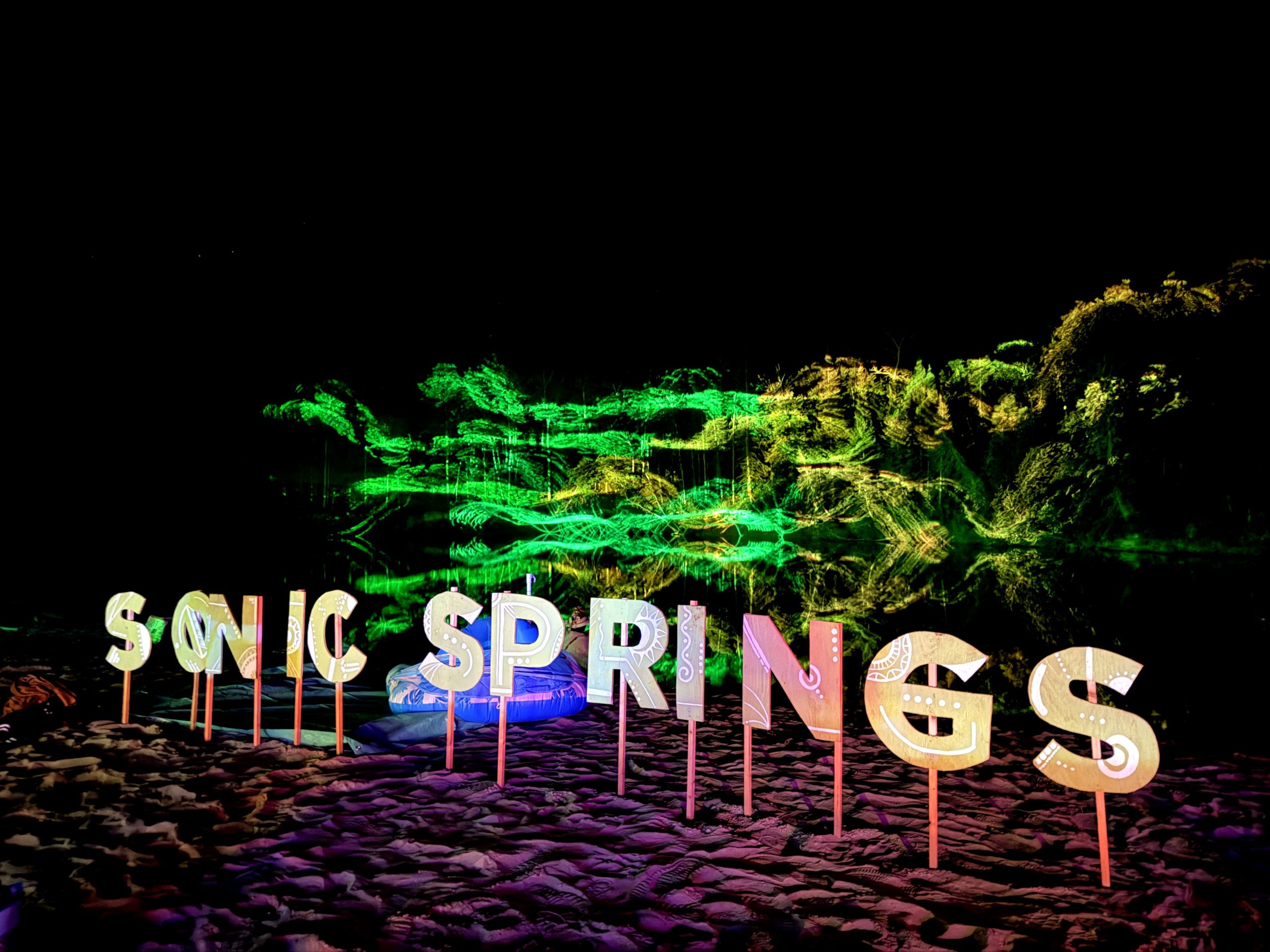
At Lotus, the river gave the music another setting to inhabit. At night, I watched people sit and talk along the beach while the lasers played across the water. You could move away from the stage without feeling you had left the experience. It was one of the visual details I would have pined for had it not been there. Kudos.
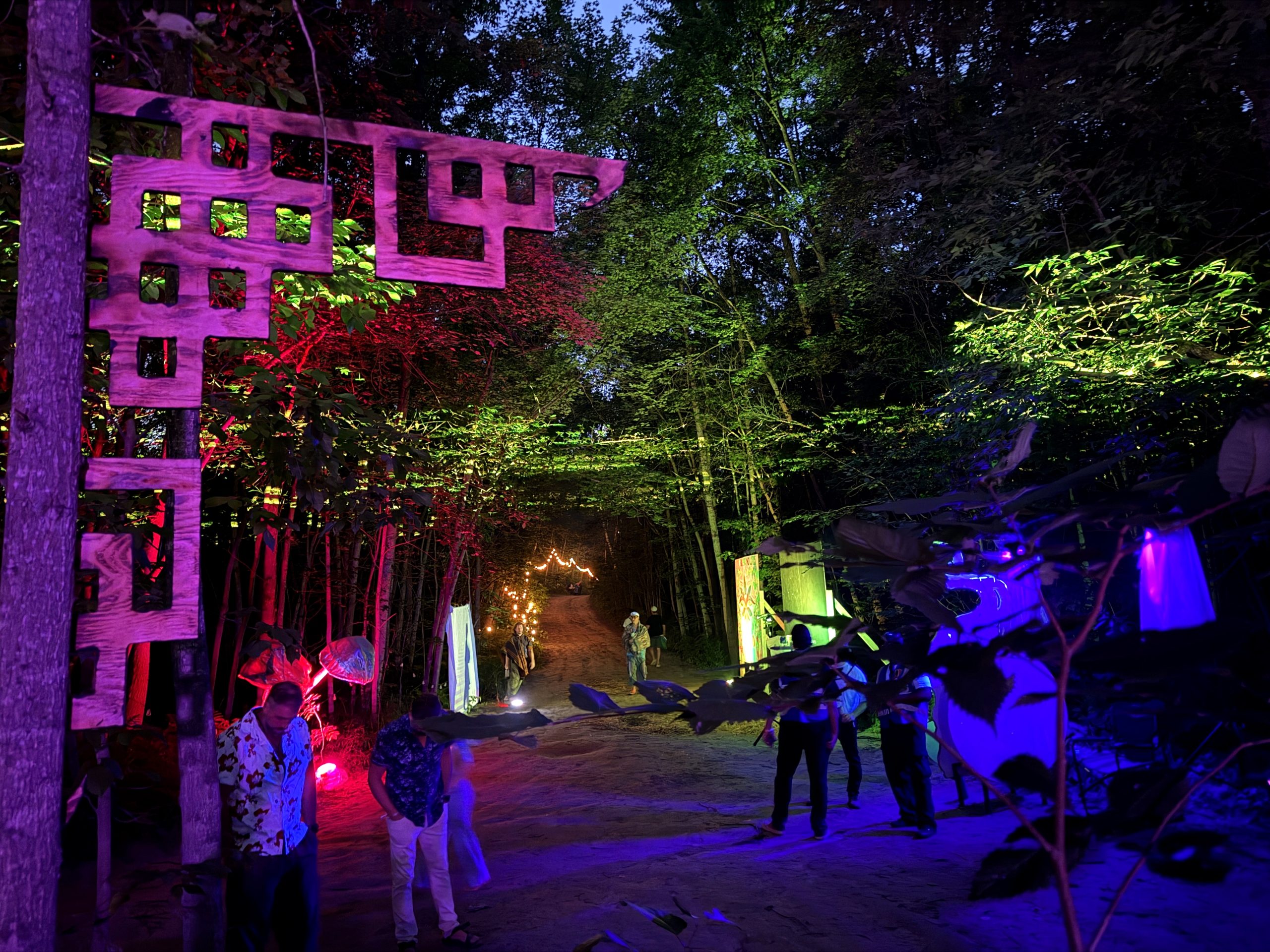
The paths through the forest were lit well by patio lighting: work Drez credits to Zach Parker and Bob Seaton within the festival’s internal site-lighting operation. I also noticed the portable toilets being looked after each morning. Those provisions made the weekend feel attended to. I do not go to a festival expecting everything to be effortless. But I do notice whether people respond when something needs attention. The straw on the trails belonged to that same pattern, alongside the more conspicuous improvements to the stages and having listened to attendee feedback.
Drez singled out booking Justin Martin as an important step in establishing Sonic Springs’ reputation. For fashion designer Evan Biddell, Martin was one of the reasons to make the trip—and one track made the effort worthwhile.
Biddell, the inaugural winner of Project Runway Canada, runs his BIDDELL boutique on Dundas Street West in Toronto, selling his own designs alongside curated vintage. His Playsuit began as something he made for his first Burning Man: sun coverage without losing the feeling of freedom. Festivals have given him more than somewhere to wear his work; they have helped him imagine what to make.
During Martin’s Saturday-night set at Sonic Springs 2026, a track brought him back to the sound of his mid-2000s rave years. Afterwards, he began searching for old favourites and more music in that vein.
“I wouldn’t be on this trajectory right now if it wasn’t for Justin Martin playing that one song at Sonic Springs, for real.”
Most weeks, he is occupied with running the shop. Getting away to dance gives him something he wants to carry back into that life: happiness, release and fresh inspiration. That particular Saturday night was still doing its work after he got home.
His weekend also challenged an assumption he had brought with him. Travelling to Sonic Springs with PINEO & LOEB, he spent hours talking music with them in the car. When they asked what he might like to hear, he pictured the wellness gathering they were heading towards and suggested long, melodic, progressive tracks. He was imagining a particular sound for a particular crowd.
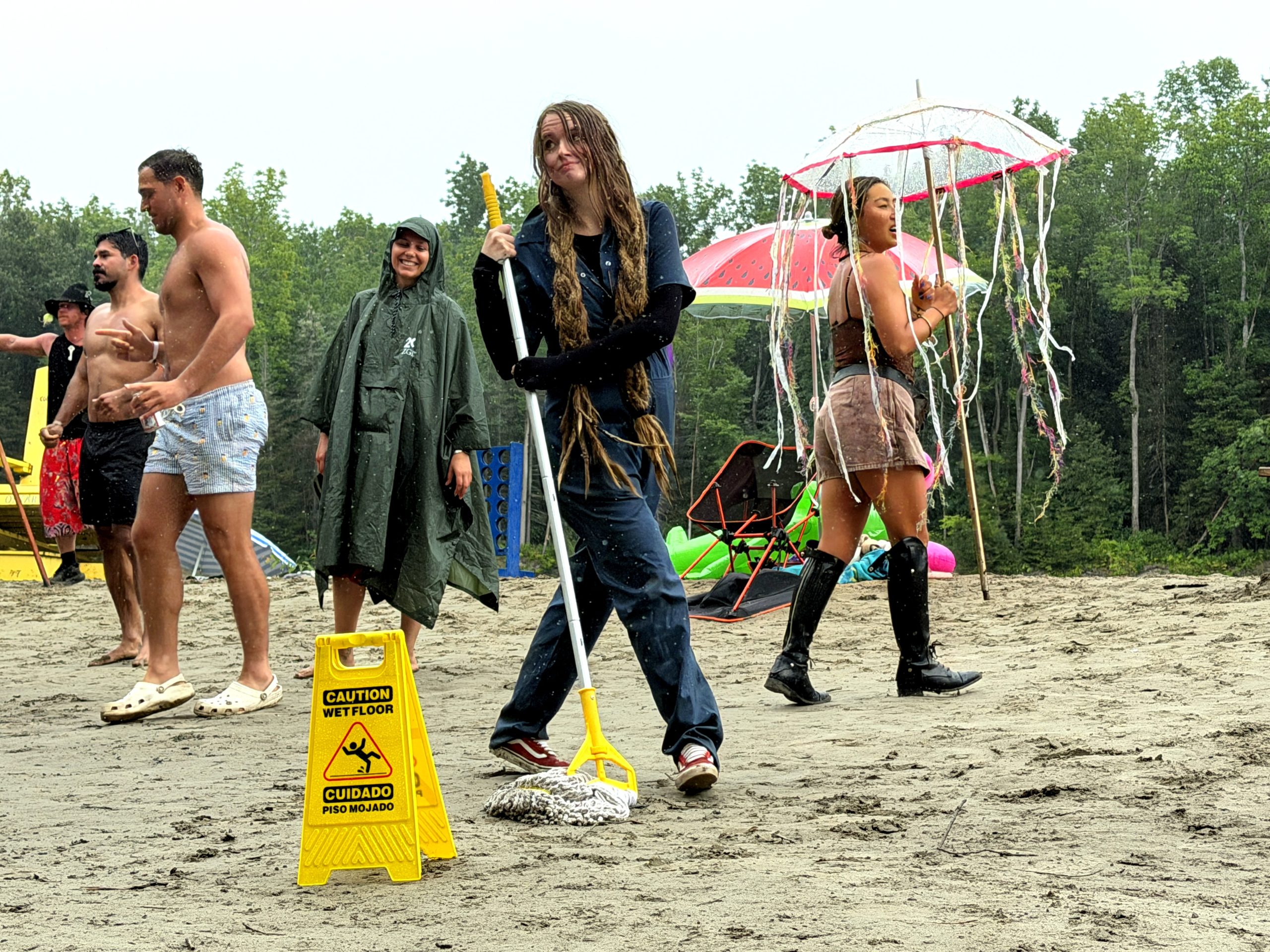
Then the duo played the kind of big, exuberant tracks he loved hearing in Shambhala’s Fractal Forest. He had not expected that set at Sonic Springs, but he loved dancing to it in the rain. The people around him seemed to love it too. Perhaps, he admitted, he had misjudged what would work there.
That made his advice to the festival more interesting. Biddell appreciated the warmth of its wellness community and liked seeing West Coast dance culture brought into it. He wanted more dancers to discover that combination. The programming had already given him compelling reasons to attend; he thought its promotion could do more to reach others who would feel the same.
“I think if they promote it properly to the right people, to get them on that dance floor, to dance with the hippies, everyone will be happy,” he said.
Our conversation about Disco Daddies offered another example of that musical range. Their Sunday-afternoon beach set ended with a heavier turn into dubstep. Biddell would not have chosen that ending himself, but he thought it suited the moment and called the music “exceptionally tasteful.” His frustrations with Shambhala concerned the darker sound and presentation he felt were spreading across several stages, leaving him fewer contrasting moods to choose from. He could still appreciate a well-placed burst of heavier music on a Sonic Springs dance floor though, that just seemed to fit.
For me, those moments suggest room to keep exploring the lineup while making its appeal clearer to people who have not yet visited. A bolder booking could give someone a reason to take a chance on Sonic Springs. What they discover once they arrive matters just as much. That sits comfortably with Drez’s wish to grow carefully: the question is how to invite more people into this particular gathering.
I recognize that perspective because I initially went to festivals for the music. The workshops and other experiences took longer to draw me in. Sometimes I was too busy dancing; sometimes I needed a conversation, an invitation or simple curiosity before trying something unfamiliar. But then I gradually came to value things I had never considered when buying the ticket. I discovered what made a music festival ‘transformational’.
That is why I see no necessary conflict between a more adventurous dance floor and the care Katt puts into wellness. Someone arriving for a specific DJ or sound on the lineup might just as well discover a practice, a friendship or a different way to spend the morning that leads them into their ‘transformation’.
They can come for the music and discover what else speaks to them once they’re there.
A business, a home base and a place to play
Biddell’s arrival had a connection to another person I interviewed. Katie Crosgrey wanted one of his Playsuits. They got talking, and when he said he lacked a home base at the festival, she offered Renegade Emporium.
Katie co-founded the mobile elixir bar with her friend Amelia. Its theatrical setup and botanical drinks give it a distinct presence, with non-alcoholic options that make stopping for a drink a social occasion in its own right. The business also serves weddings and private events. Katie brings cooking and building experience; Amelia brings her bartending skills. Katie and her husband helped build the travelling setup.
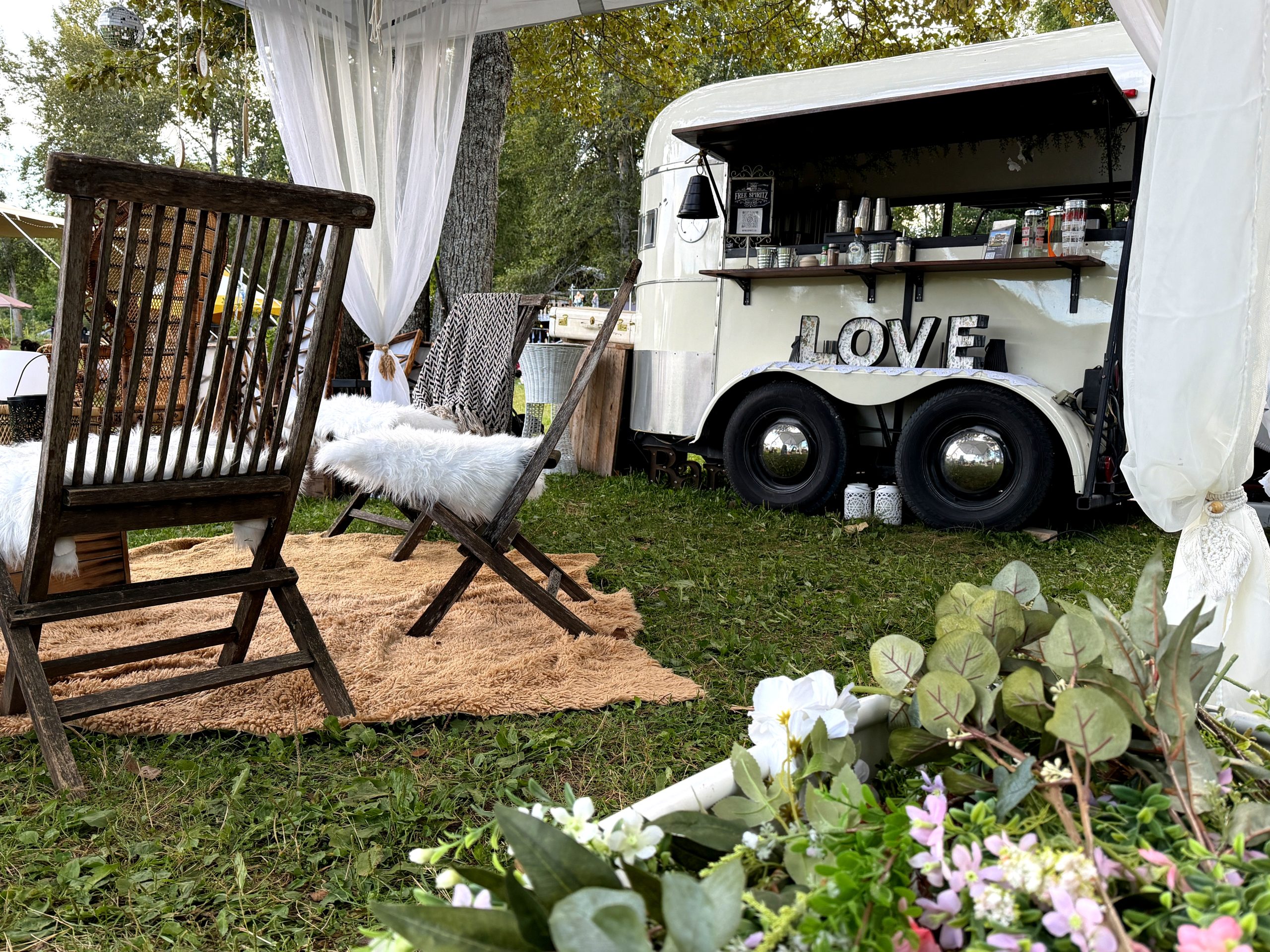
This was Katie’s third Sonic Springs and her second as a vendor. She first came alone, volunteering after a West Coast-leaning lineup caught her attention. Having returned east after a decade away, she was looking for community. She credits Sonic Springs with helping her find it.
“I think one thing that’s really important when you’re a vendor is to go to festivals that you actually want to attend,” she told me.
Wanting to attend does not make the work disappear. She described needing to transport in filtered water (key for their drinks), finding ice, powering refrigeration and estimating what people would buy. Get the quantities wrong and the excess may expire. On the cold, rainy Sunday morning, their bone broth sold out at the Lotus stage. That was a satisfying match between preparation and what people needed, but she was clear that attendees were not responsible for rescuing a vendor’s calculations. Nailing that juggle is purely on them.
But getting the business side right was only part of why they were there. Katie described the Emporium as a passion project, driven by their love of the music and the people they meet. “We like creating an experience,” she said. Earlier, she had struggled to single out one memorable moment from the weekend. Now, talking about what they contributed themselves, she remembered the children.
The Emporium team had set up little “side quests” in the porta-potties. For children who couldn’t yet read, Katie adapted the game: identify the pictures and receive a trinket. They kept coming back, so she gave them another mission—find some pine cones. Back they came with their discoveries, ready for another exchange.
The activity outside the booth took other forms, too. A circus duo spun and danced with a young boy. On another occasion, returning from a set at around 2:30 a.m., Katie and her companions found a gathering around the Emporium, with people spinning fire poi. They ended up DJing for the group. Between the games they started and the gatherings that found them, the Emporium had become much more than somewhere to buy a drink.
Drez had seen another connection form around the Emporium. Katie had told him Justin Martin was her favourite set at the previous year’s Shambhala. Then he saw a photograph she shared: Martin at her booth, holding a drink she had made. He called it a “full circle moment.” The musician she had enjoyed watching was now experiencing something she had created. Drez remembered seeing her designs for the Emporium; Sonic Springs had given that idea somewhere to take shape and meet an audience.
He also recognized the balancing act behind it. Running a festival or bringing a business into one meant weighing the time, effort and financial realities against the pleasure of making something and seeing people respond. Katie’s stories had already shown what that response could look like: children returning for another game, strangers gathering outside her booth, an evening turning into an unexpected party. Making the business work mattered because she wanted to keep being part of those moments—and creating a few herself.
The people inside the art
Micha Dahan, the cinematographer and video artist behind Self-Reflectron, offered another way into the participation Drez described. Stand before his Ripples of Time and echoes of your body cascade into apparent distance. Move a hand and the gesture repeats through the camera’s feedback loop, travelling down what looks like an endless tunnel. Your movement gives you something to watch and play with, drawing you further into the encounter.
“It’s a machine that invites you to move,” he explained.
His Fantastic Elastic Vortex offers a more tactile experience. A projected spiral appears on a flexible circular screen; push or stroke the surface and the image responds, carrying the disturbance through the feedback even after the fabric settles. Dahan described adjusting camera angles and shutter settings to change how those movements unfold. Some of the effects surprised him as much as his audience: he had to build a prototype before he could discover what it would do. What visitors encounter as a moment of play is the result of endless iterations and patient experimentation.
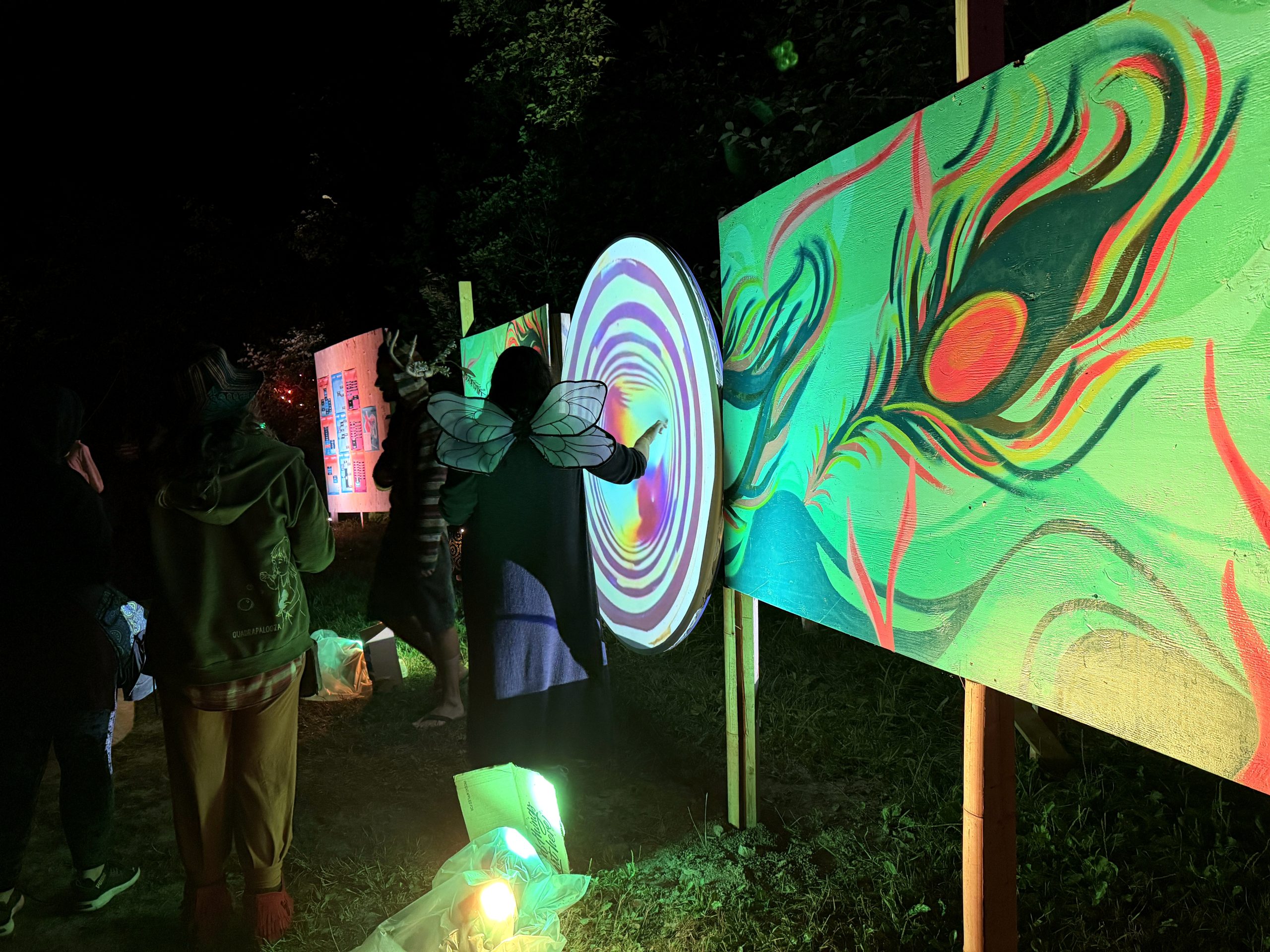
This summer alone, he had brought his work to Bass Coast, Shambhala and Future Forest before landing at Sonic Springs, with Harvest still ahead. That circuit gave him plenty to say about the challenge of sustaining live visual art. Equipment, travel, time, recognition and practical support all matter. An audience’s enjoyment is real, but it does not settle every question about how a practice continues.
His comments about Sonic Springs were appreciative. He praised the setting and the kindness of the people behind it, and credited Jesse and Chocolate Groove with opportunities to develop his work. Those opportunities had allowed him to test ideas with audiences rather than leave them as experiments waiting to be unpacked in a garage.
I wanted that perspective in the review because it changes how you see an installation. There is a person behind it, still learning what it can do. Giving that person a name and following their work beyond the weekend is a small way of taking the encounter seriously and remembering the impact it made.
Chelsea Frattura, a Toronto oil painter and arts facilitator whose surreal landscapes explore memory, environment and imagined spaces, handled the gallery’s setup and curation. Nearby, craftmanship itself became part of the show: during Justin Martin’s set, I watched glass artists working at their torches, shaping small trinkets while people gathered around.
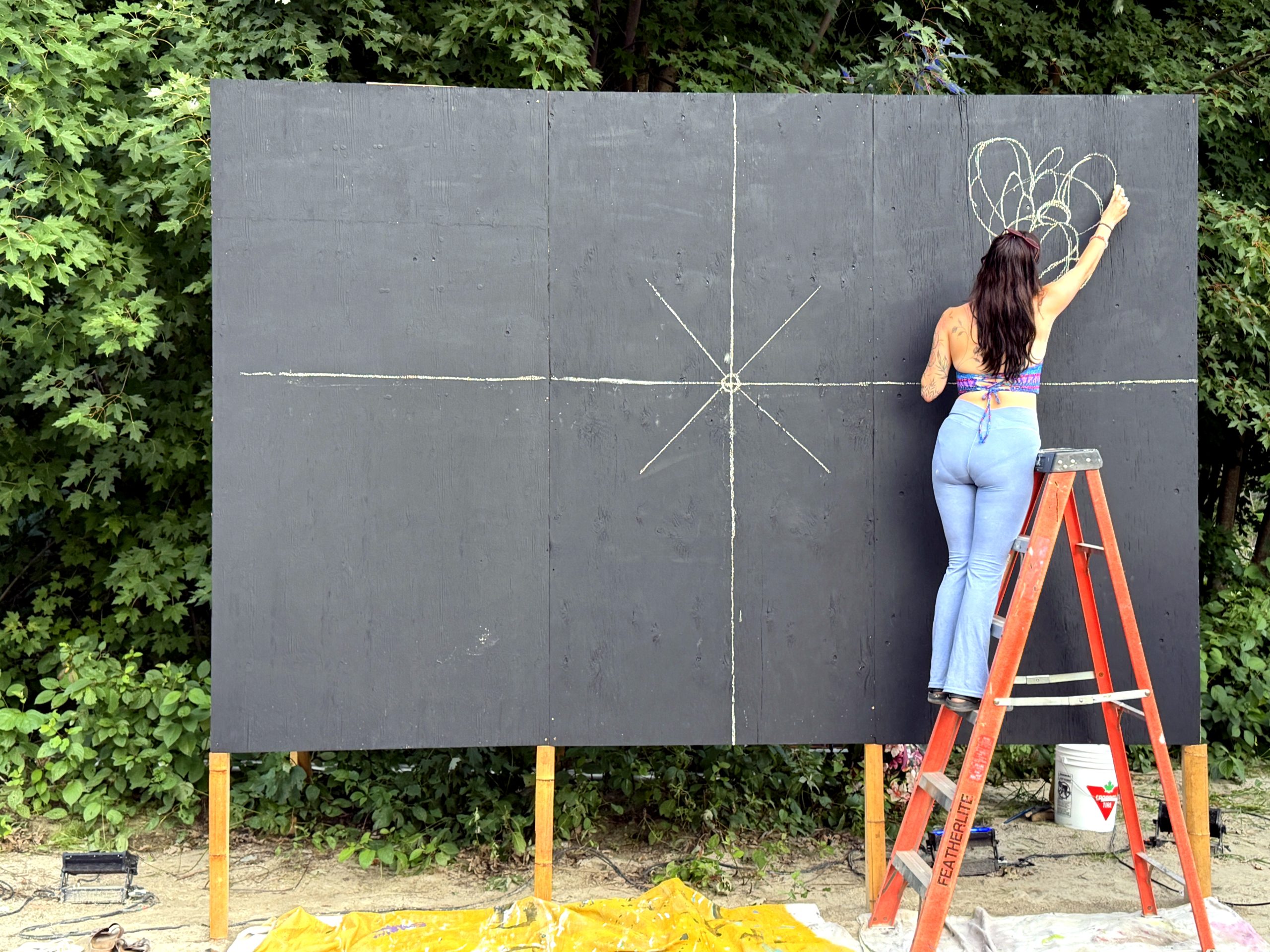
There were quieter examples of craft, too. Natasha Parker created and managed the Lotus artist lounge, bringing her own fabrics and furniture to make somewhere performers could settle and grab a fizzy drink.
Brian Kinsman brought his cabinetry skills to the lounge’s large wooden lotus—his first project of this kind, and one that left him excited to do more. His sculpture complemented Mattie Fisher’s centrepiece behind the Lotus DJ booth, creating a visual connection between the green room and the stage that not everyone got to see.
Enough people, and reasons to return
Goodwill carries a great deal at a gathering this size. Katie spoke warmly about Justine Kovacs, the volunteer coordinator who helped make her first visit feel welcoming. Drez called paying a strong volunteer coordinator one of the festival’s best investments. He also credited Deanna D., this year’s Head of Logistics, with taking substantial responsibility off his shoulders.
That is an important companion to the story of a founder spreading straw. His willingness to help matters; and so does building a team that can keep improving the work. Drez described gradually adding paid responsibilities and wanted to keep the people who understood the event. As attendance grows, he sees parking leadership becoming another role worth strengthening.
He was equally interested in learning from the place. Fishers’ Paradise hosts Chris Fisher and Julie Ann Bertram, and the River & Sky community, had relationships and knowledge that Sonic Springs needed time to earn. Drez visits River & Sky to watch parking and movement around the land. He described trust developing over three editions, alongside arrangements for shared resources.
There have been difficult decisions along the way. Moving from the Paisley area meant asking the audience to follow, working with new hosts and learning how to produce the event somewhere different. Asked what kept him going, Drez returned to conviction.
“It’s all about believing in the dream and persevering.”
Belief still has to meet the cost of a venue, toilets, security, medics, crews and fuel for off-grid power. Drez talked about learning to manage those demands better as the event develops. A weekend can be a success for the people inside it without success being effortless for the people producing it. I want readers to understand that work, because it makes the achievement more substantial.
He put the 2026 gathering at around 800 people on site. I can imagine the energy an audience of 1,500 might bring. His preferred next step was more measured: reach roughly 1,000–1,200 at this venue, experience that scale for a while, and see how it feels. When I raised 2,000, he was not even sure it would fit.
“But I think I’d rather stay at a good intentional capacity and kind of just keep it at that,” he said.
I found that answer reassuring. Getting better does not have to mean getting indefinitely bigger. There is room in Ontario for a festival whose appeal includes recognizing people, finding your way between stages without an expedition, and seeing your own contribution make a difference.
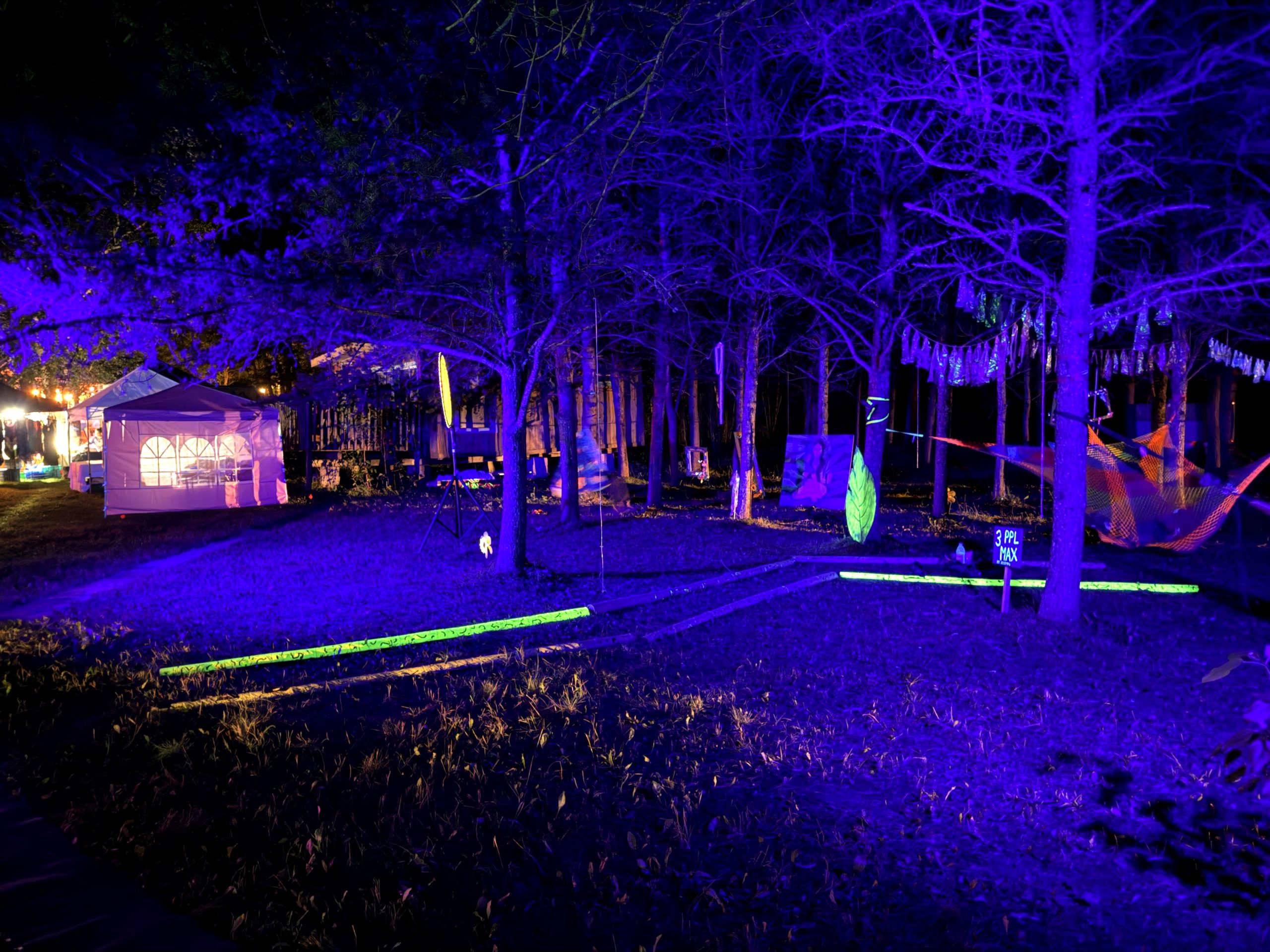
The organizers’ August 25 email reported that first-day demand for 2027 loyalty tickets had exceeded their expectations. Buying early helps them plan and commits something tangible to the next edition. When I asked Drez what a person who loved Sonic Springs could do to help it reach its tenth anniversary, he did not make the answer complicated.
“For me, it’s honestly just buying a ticket and like supporting the dream.”
He also welcomed people sharing the festival and bringing skills through its teams. Katie is confident enough to predict a sellout next year. My optimism comes from what I experienced and what these conversations helped me understand: people noticing, learning, making things and choosing to come back.
Years of returning to Envision have taught me that I cannot recover exactly the weekend I had before. I go looking for it anyway, then leave with a different experience I wish I could repeat. That opening-ceremony observation was right. This particular Sonic Springs will not happen again.
But another one can. For someone in Ontario curious about this kind of music, creativity and community, I would encourage the trip. After year five, I see a festival worth returning to—and people committed to making that return worthwhile.
More from Sparked Magazine
Festival guides, interviews and features from Sparked Magazine.


Continue Exploring
 Australia
Earth Frequency ’26 Survival Guide
Woodfordia has permanent amenities, but Earth Frequency remains a four-day outdoor operation. Plan arrival, weather, fire, power, safety, access and Tuesday departure.
 United States
Suwannee Hulaween ’26 Survival Guide
The useful Hulaween checklist is a set of systems: arrival, sleep, weather, water, food, navigation, access, care and departure.
 United States
Suwannee Hulaween ’26 Inspo Guide
Hulaween’s art and participatory program work best when readers reserve time for them before the schedule turns every path into a shortcut.