


Read the lineup by feel
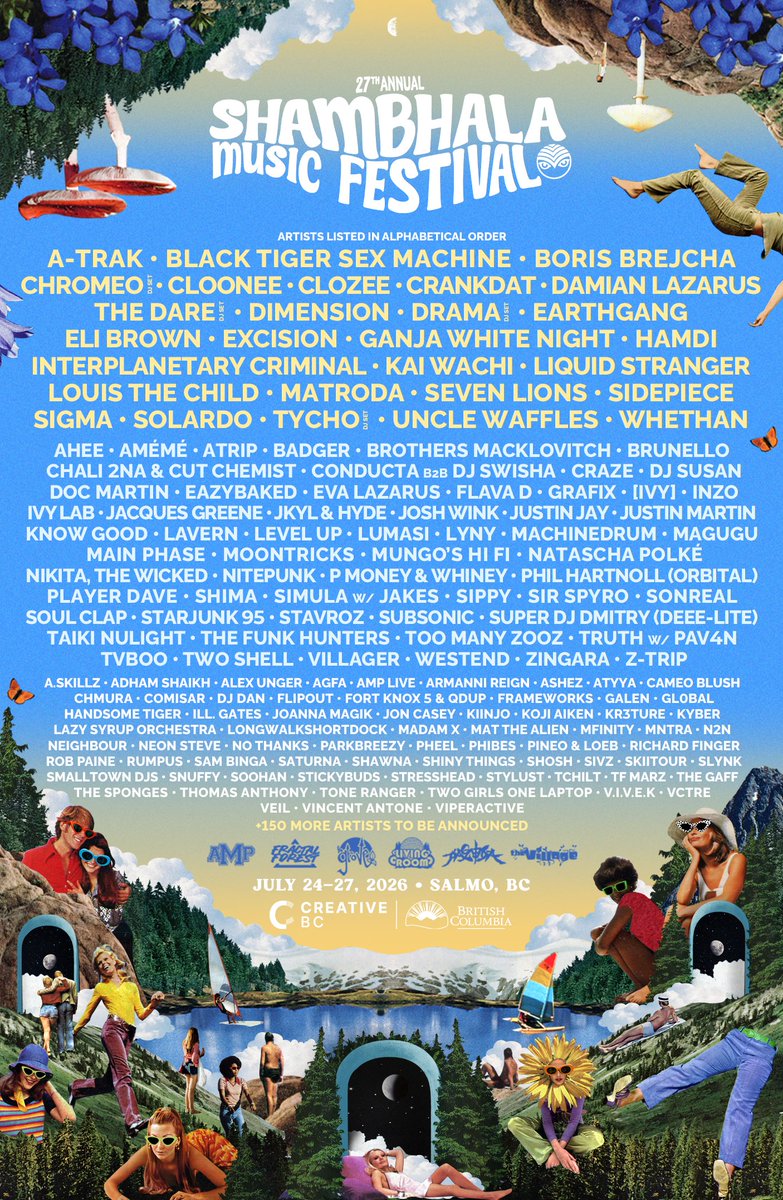
Shambhala is a stage-culture festival as much as a lineup festival. The 2026 poster has 150+ artists, but the real listening path comes from how the Farm divides personality across its stages.
| If you want… | Start listening for… | Possible 2026 entry points |
|---|---|---|
| Bass impact | Dubstep, melodic bass, heavy low-end, big-rig release | Excision, Ganja White Night, Liquid Stranger, Hamdi, Black Tiger Sex Machine |
| House and techno motion | Four-on-the-floor drive, tech-house bounce, melodic techno, club focus | Boris Brejcha, Cloonee, Eli Brown, Matroda, Solardo, Sidepiece |
| Funk and shiny party craft | Electro-funk, turntablism, disco edges, playful crowd reading | Chromeo, A-Trak |
| DnB and fast movement | Breakbeats, rolling drums, sprint-speed release | Dimension, Sigma, Grafix, Whiney |
| Melodic and atmospheric reset | Electronic glow, softer release, sunrise feeling, emotional build | CloZee, Tycho, Seven Lions |
| Forest-stage discovery | Organic soundscapes, UKG, deep bass, theatrical performance, left-field rhythm | Grove and AMP lineups, including Ivy Lab, Jacques Greene, Conducta, Truth, Taiki Nulight |
The grin comes from Chromeo beside A-Trak. Shambhala is famous for serious electronic intensity, but the funk and party-craft lane keeps the weekend playful. Chromeo gives the poster that glossy electro-funk wink; A-Trak brings turntable history and a party brain sharp enough to read a huge crowd without sanding off the details.
The bass lane is the obvious Shambhala muscle. The Village Stage 2026 announcement leans into Excision, Ganja White Night, Seven Lions, Dimension, and Sigma, which tells first-timers exactly where to go when they want the big, physical version of the Farm. The AMP Stage points deeper into dubstep, UKG, halftime, and left-field bass with names like Truth, Rusko, Taiki Nulight, Hamdi, and Shosh.


For balance, follow the Grove Stage when you want the forest to feel like part of the music. EarthGang, Drama, Interplanetary Criminal, Tycho, Conducta, Jacques Greene, and Ivy Lab suggest a more textured route: still danceable, but less like being launched and more like being pulled through trees by rhythm and light.
If you are trying to attend this year, use the official Shambhala waitlist/access page. For listening, start with the 2026 lineup and then read the stage announcements before you decide what kind of night you want.
Build a listening route
Shambhala’s listening path starts with stages rather than names. This is a festival where stage identity teaches the lineup: Fractal Forest for funk, breaks, house, disco, and party craft; The Village for bass weight and spectacle; The Grove for deeper, stranger, more textured routes; AMP for low-end experimentation and underground edges; Pagoda for scale and light; Living Room for river-adjacent release.
The funk-first route has a natural home in Fractal Forest. Chromeo and A-Trak make sense because they bring funk, style, dancefloor literacy, and a kind of playful intelligence that matches a rhythm-first reading. That does not make the heavier stages less important. It gives readers an entry point that sounds like a party with taste.
The bass route belongs to Shambhala’s identity, but it needs to be described with clarity rather than macho intensity. The Village and AMP lanes can mean dubstep, drum and bass, halftime, grime, leftfield low-end, and speaker-first body impact. The question for a reader is whether they want bounce, wobble, speed, darkness, play, or full-body weight.
The Grove and Living Room routes give the weekend its texture. They are where a reader can soften the edges, find more hypnotic sets, follow mood, or let the river reset the body before returning to heavier sound. Shambhala works best when readers stop treating the weekend as a conquest and start using the stages as different rooms in one strange house.
Check the official stage lineups and schedule before planning, then use the official access page for waitlist, shuttle, lodging, and crew options.
A first-timer route might begin with Fractal Forest for joy, move to The Village for the famous Shambhala low-end experience, visit The Grove for texture, and save The Living Room for a river-adjacent reset. That kind of route helps the weekend feel like exploration instead of endurance.
The festival also rewards stage loyalty. Some attendees organise their whole Shambhala around one room because each stage has its own culture, regulars, sound, and visual language. The listening path makes that legible: choosing an artist also means choosing the room that will hold your night.
Let the setting change the plan
Fractal Forest gives funk-first listeners a natural entry point because funk, breaks, turntablism, disco, and party craft are part of its personality. The heavier stages matter, but the funk route helps readers feel the festival’s sense of play.
Use the official Shambhala lineup and stage announcements before planning, then check the official access page for waitlist, shuttle, lodging, crew, and volunteer options.
The heavy route is part of the myth, but a stronger weekend uses contrast. Let one night be full low-end pressure, another be funk and play, another be forest texture, and another be river-adjacent softness. Shambhala has enough rooms for more than one self.
That variety is why the poster works as a map of behaviour. Each stage teaches the crowd a different posture: charge, loosen, recover, wander, listen, or fully give in to the system.
Read that map before arrival, then let the Farm change the order once the night starts.
That flexibility keeps the weekend human.
It also keeps the sound from turning into homework.
Continue Exploring
 Australia
Earth Frequency ’26 Sound Guide
A listener-first route through Earth Frequency’s current psychedelic, club, bass, funk and live programme—corrected for the latest lineup change and honest about the missing timetable.
Australia
Earth Frequency ’26 Sound Guide
A listener-first route through Earth Frequency’s current psychedelic, club, bass, funk and live programme—corrected for the latest lineup change and honest about the missing timetable. United States
Suwannee Hulaween ’26 Sound Guide
The 2026 bill is too mixed to reduce to headliners. A better route follows live improvisation, electronic scale, rhythm and the collaborations that blur those categories.
United States
Suwannee Hulaween ’26 Sound Guide
The 2026 bill is too mixed to reduce to headliners. A better route follows live improvisation, electronic scale, rhythm and the collaborations that blur those categories. Australia
How Dragon Dreaming Found Its Place
From a Canberra call for contributors to a lakeside home at Wee Jasper, Dragon Dreaming’s history reveals how an unusual festival learns to belong without becoming ordinary.
Australia
How Dragon Dreaming Found Its Place
From a Canberra call for contributors to a lakeside home at Wee Jasper, Dragon Dreaming’s history reveals how an unusual festival learns to belong without becoming ordinary.