


Start with the conditions
Shambhala is beautiful because it is intense. The Farm can feel like a whole world, but it is still a rural BC camping festival with heat, cold nights, dust, river reality, entry timing, camp setup, and the slow arithmetic of many late nights in a row.
Start with access. Tickets for 2026 are sold out, so any last route in begins at the official tickets, waitlist, shuttle, lodging, crew, and volunteer page. Do not build a trip around a random resale hope. Build it around a verified access plan, a place to camp, and a way to get to and from the Farm without turning Monday into punishment.
The practical rule for Shambhala is to pack for two festivals: the hot daytime Farm and the cold nighttime Farm. Bring the fun pieces, but do not let the outfit be the only system. A hoodie, onesie, or insulated layer can save the night. A real sleeping bag and sleeping pad can save the morning. River shoes, dust protection, electrolytes, earplugs, and a headlamp all earn their space.


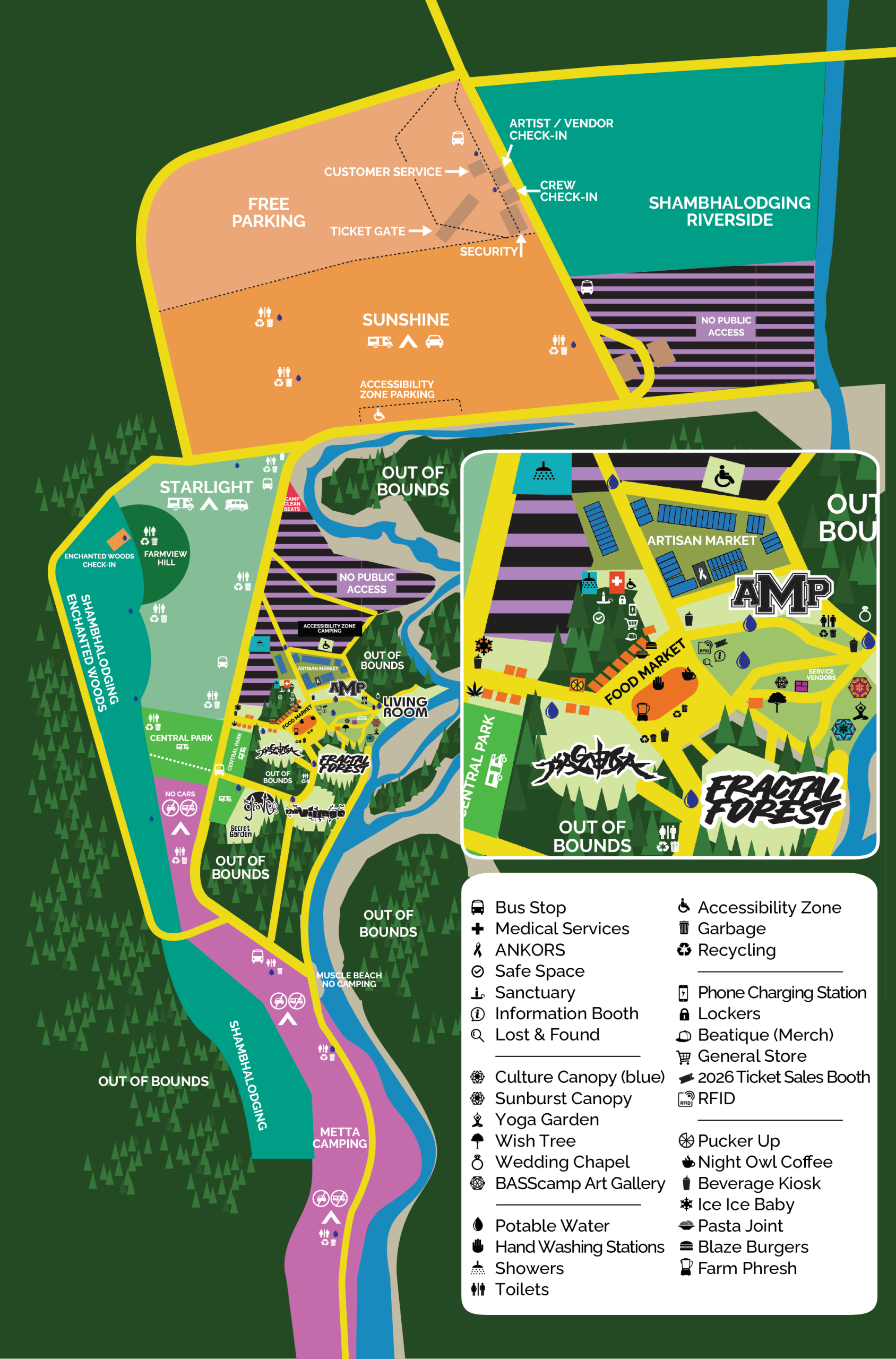
Health and care are part of the survival plan here. Shambhala’s Health, Safety & Harm Reduction system includes ANKORS drug checking, safer-sex supplies, medical services, Sanctuary, consent/outreach teams, and Safe Space support. These services help people stay alive, informed, supported and able to ask for help without shame.
Shambhala checklist: verified ticket/access plan, ID, shuttle or driving plan, camp pass/lodging details, water containers, refill bottle or hydration pack, shade, warm night layer, onesie or hoodie, real sleeping bag, sleeping pad, dust mask or bandana, river shoes, earplugs, electrolytes, camp food, headlamp, battery pack, first aid, medications, sober-exit plan, and a meeting-point plan that works without phone service.
Distinctive prep to notice: plan for sold-out access, use official shuttle/lodging/waitlist channels, know where health and harm-reduction services are, prepare for police checkpoints and rest before driving out, and treat river time as recovery rather than a place to shed glitter, trash, or carelessness.
Make camp and travel work
Use Shambhala’s FAQ, Tickets & Camping, and Health, Safety & Harm Reduction pages as your starting kit before packing.
Shambhala survival starts with respect for the Farm. Music is only one part of the plan; camping, river conditions, dust, heat, cold nights, entry lines and harm reduction shape the rest. People love Shambhala for the same reasons it can overwhelm them.
Access comes first. Tickets are sold out for 2026, so use verified waitlist, shuttle, lodging, volunteer, or crew channels instead of building a trip around wishful resale. Know your arrival path, your camping plan, your shuttle timing, and how much gear you can realistically carry.
Pack for hot days, cold nights, dust, river time, and long walks. Bring a refillable water setup, electrolytes, warm layers, sleeping bag, shade if your camp setup allows it, sturdy footwear, river shoes, dust protection, sunscreen, headlamp, earplugs, and enough food that you are not depending on a tired late-night decision for every meal.
Harm reduction is not an optional paragraph here. Know where ANKORS, medical, Sanctuary, Camp Clean Beats, consent support, and safer-sex resources are before the weekend becomes intense. Festivals earn trust when they treat safety as real instead of pretending rules erase risk.
Style still belongs in the survival guide. Shambhala costuming can be playful, wild, sexy, handmade, ridiculous, elevated, or all of that at once. A good look has to remain livable: shoes that work, layers that come back on at night, bags that stay secure, and pieces that do not leave trash or glitter behind.
Use the official rules
Read the official FAQ, health and safety, harm-reduction, shuttle, lodging, and prohibited-item pages before packing.
The river is a gift, but it is not a substitute for hydration or sleep. Use it as recovery, not as proof that the body can keep going forever. Bring river shoes, dry clothes, sun protection, and enough patience to respect the shared space.
Entry and exit deserve more planning than people want to give them. Rural access, vehicle lines, camping load-in, and the Monday departure can all test the mood. Keep food, water, layers, and patience accessible before the gate, not buried under the entire camp.
A Shambhala checklist starts with ID, verified access, shuttle or vehicle plan, camping setup, water capacity, electrolytes, warm night layers, dust protection, river shoes, all-season sleep setup, earplugs, headlamp, first aid, medications, consent awareness, and a clear plan for where to find help.
Use the official Shambhala FAQ, Tickets & Camping, and Health, Safety & Harm Reduction pages as the final authority before packing.
Sleep strategy matters as much as the outfit. Bring what helps the body shut down when the Farm is still awake: earplugs, eye mask, warm bedding, clean socks, and enough discipline to stop before the next day is ruined.
The best Shambhala survival plan respects joy without pretending intensity is harmless. Prepare well enough that the wild parts can stay beautiful instead of becoming a rescue mission.
Continue Exploring
 Australia
Earth Frequency ’26 Survival Guide
Woodfordia has permanent amenities, but Earth Frequency remains a four-day outdoor operation. Plan arrival, weather, fire, power, safety, access and Tuesday departure.
Australia
Earth Frequency ’26 Survival Guide
Woodfordia has permanent amenities, but Earth Frequency remains a four-day outdoor operation. Plan arrival, weather, fire, power, safety, access and Tuesday departure. United States
Suwannee Hulaween ’26 Survival Guide
The useful Hulaween checklist is a set of systems: arrival, sleep, weather, water, food, navigation, access, care and departure.
United States
Suwannee Hulaween ’26 Survival Guide
The useful Hulaween checklist is a set of systems: arrival, sleep, weather, water, food, navigation, access, care and departure. Australia
Earth Frequency ’26 Inspo Guide
Frequency Village, Luminarium, performance and The Crib give Earth Frequency a second timetable. Here is how to protect time for it before the music schedule takes over.
Australia
Earth Frequency ’26 Inspo Guide
Frequency Village, Luminarium, performance and The Crib give Earth Frequency a second timetable. Here is how to protect time for it before the music schedule takes over.