


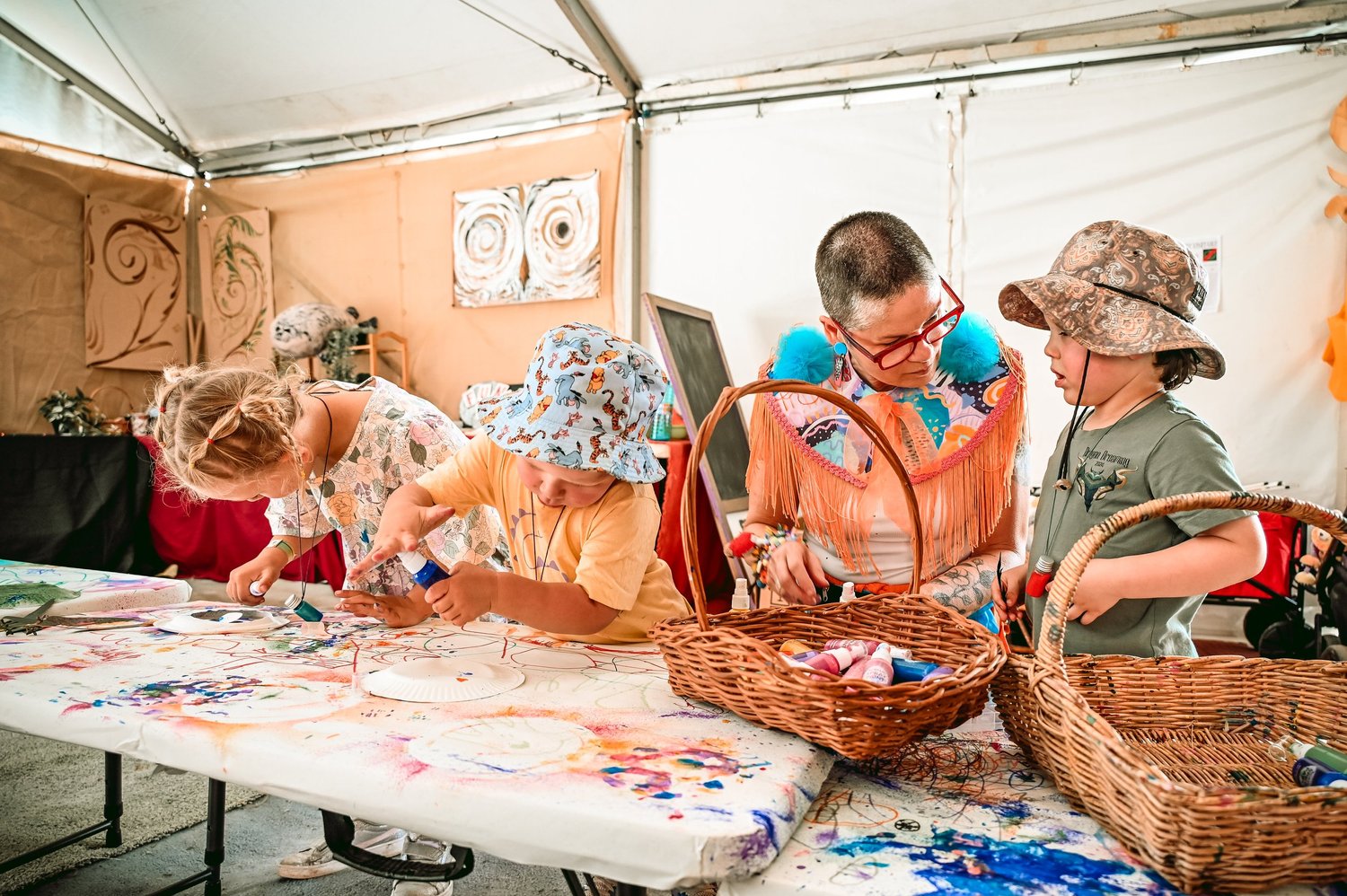
At Dragon Dreaming, the market belongs in the day’s rhythm: a place to find food, look closely at handmade work and meet people away from the busiest stages. Its value is not only what you buy. A conversation with a maker can give a garment, object or image a connection to the weekend that anonymous festival merchandise cannot.
The festival’s Hatchling programme includes a handmade and jewellery category alongside music, performance and visual art. That places traders within its creative-development programme, not only its retail provision. It is a reason to pay attention to new makers while still asking ordinary questions about materials, fit and care.
A complete current food and trader roster has not been verified for this guide. The names on the Hatchling page’s 2025 winners list are historical, not a confirmed 2026 market roll call. Use the following plan to explore the market, and check the festival’s current announcements before relying on a particular meal, maker or service.


Read the roster for needs, not just names
When the current trader and food list is published, sort it into four questions:
• Where can you get a substantial meal, not only a snack?
• Which dietary needs are explicitly addressed?
• Which traders sell practical festival items?
• Which makers offer something specific enough that you will regret walking past it on Monday?
That first pass prevents two common mistakes: bringing no dependable food because “there will be vendors,” and overpacking every meal because you never checked what the market is for.
People managing allergies, intolerances or medication-linked food timing should bring a reliable base supply. Vendor labels are useful signals, not medical guarantees. Ask about ingredients and cross-contact directly, and have a fallback that does not depend on stock lasting until the final day.
Build a spending plan that leaves room for discovery
Set aside three different amounts rather than one vague festival budget:
• meals and drinks;
• practical replacements or comfort purchases;
• art, clothing or objects made by independent traders.
The separation matters. It is difficult to support a maker you genuinely like after the entire budget has dissolved into unplanned snacks and convenience purchases.
The official FAQ advertises ATMs but recommends bringing cash because reception is poor. Bring a physical card as well, and keep travel money separate from your shopping budget. A useful price or purchase decision should not depend on being able to open a banking app at the booth.
Shop when you can see the work
Markets change character across the day. Daylight is better for judging colour, finish, fit and construction. It also gives you a chance to speak to the person who made the object before the evening crowd thickens.
Ask useful questions:
• Did the trader make or design it?
• What material is it made from?
• How should it be cared for?
• Can it survive the rest of the weekend?
• Is there a studio or online store to return to later?
That is more interesting than bargaining a small maker down because the setting looks informal.
Avoid panic buying as a packing strategy
The market may rescue a forgotten layer, broken accessory or missing toiletry. It should not be your entire contingency plan.
Bring the equipment that keeps you safe and functional: sleep system, medication, weather protection, water capacity, footwear, light and charging. Treat anything bought onsite as improvement, not infrastructure.
The strongest practical purchase is often the one that solves a problem for the whole weekend—a warmer layer, better sun protection, a durable cup or a small item that makes camp work—rather than something selected at peak excitement and abandoned before the drive home.
Food is also scheduling
A long queue at the wrong time can erase the set you planned to see. Eat before the crowd reaches the same conclusion. Identify at least two viable meal options when you first walk through the market, then note when each appears open and busy.
Keep food and rest ahead of the point where choosing a meal feels like another task.
For a maker, ask where the work is designed and produced and where to find it after the event. Save the name and contact details rather than relying on a remembered stall location. A later order can be a better decision than carrying something fragile through the rest of a camping weekend.
Keep wellness purchases separate from medical help
The festival advertises healing offerings, but that does not establish the price, qualifications or clinical value of an individual service. Ask what a session involves, whether touch is used and what it costs before agreeing. You should be able to decline without pressure.
For illness, distress or a safety concern, use the festival’s medical team or DanceWize NSW, not a retail or wellness booth as a substitute. DanceWize’s advertised role includes peer support, education and a care space. Knowing the difference helps you choose the appropriate place without expecting a trader to provide a service they are not there to deliver.
Leave with fewer disposable decisions
The most credible festival-market sustainability is practical: reusable systems that actually get used, traders who can explain materials and production, and purchases that still have a life after the wristband comes off.
Dragon Dreaming’s waste instructions ask campers to take their rubbish away; event bins are reserved for food scraps and eligible ten-cent-return containers. Pack waste bags, carry a small shopping bag and ask about packaging before buying. Reusable cups and food containers help only when you have a practical way to clean and carry them.
Give yourself time to enjoy the work rather than approach every booth as either an impulse purchase or an interrogation. Ask a couple of specific questions, respect the maker’s price and buy something you can use, maintain or display after the campsite is packed. That is a more durable way to support the culture than collecting objects you cannot get home intact.
Sources and further reading
Festival programme · 2026 lineup · FAQ · Ticket conditions · Hatchling competition · Harm reduction
Prepared from the festival research compiled on September 1, 2026, with selected official-source checks on September 5. Historical examples are identified in the text. Check live ticket, programme and arrival information before purchase or travel.
More festival coverage from Sparked Magazine
Festival guides, sound guides, market guides and reported features from Sparked Magazine.


Keep exploring: start with the full festival guide and plan the music with the Sound Guide.
- Read the roster for needs, not just names
- Build a spending plan that leaves room for discovery
- Shop when you can see the work
- Avoid panic buying as a packing strategy
- Food is also scheduling
- Keep wellness purchases separate from medical help
- Leave with fewer disposable decisions
- Sources and further reading
- Explore this festival
Continue Exploring
 Australia
Earth Frequency ’26 Survival Guide
Woodfordia has permanent amenities, but Earth Frequency remains a four-day outdoor operation. Plan arrival, weather, fire, power, safety, access and Tuesday departure.
Australia
Earth Frequency ’26 Survival Guide
Woodfordia has permanent amenities, but Earth Frequency remains a four-day outdoor operation. Plan arrival, weather, fire, power, safety, access and Tuesday departure. United States
Suwannee Hulaween ’26 Survival Guide
The useful Hulaween checklist is a set of systems: arrival, sleep, weather, water, food, navigation, access, care and departure.
United States
Suwannee Hulaween ’26 Survival Guide
The useful Hulaween checklist is a set of systems: arrival, sleep, weather, water, food, navigation, access, care and departure. United States
Suwannee Hulaween ’26 Inspo Guide
Hulaween’s art and participatory program work best when readers reserve time for them before the schedule turns every path into a shortcut.
United States
Suwannee Hulaween ’26 Inspo Guide
Hulaween’s art and participatory program work best when readers reserve time for them before the schedule turns every path into a shortcut.