


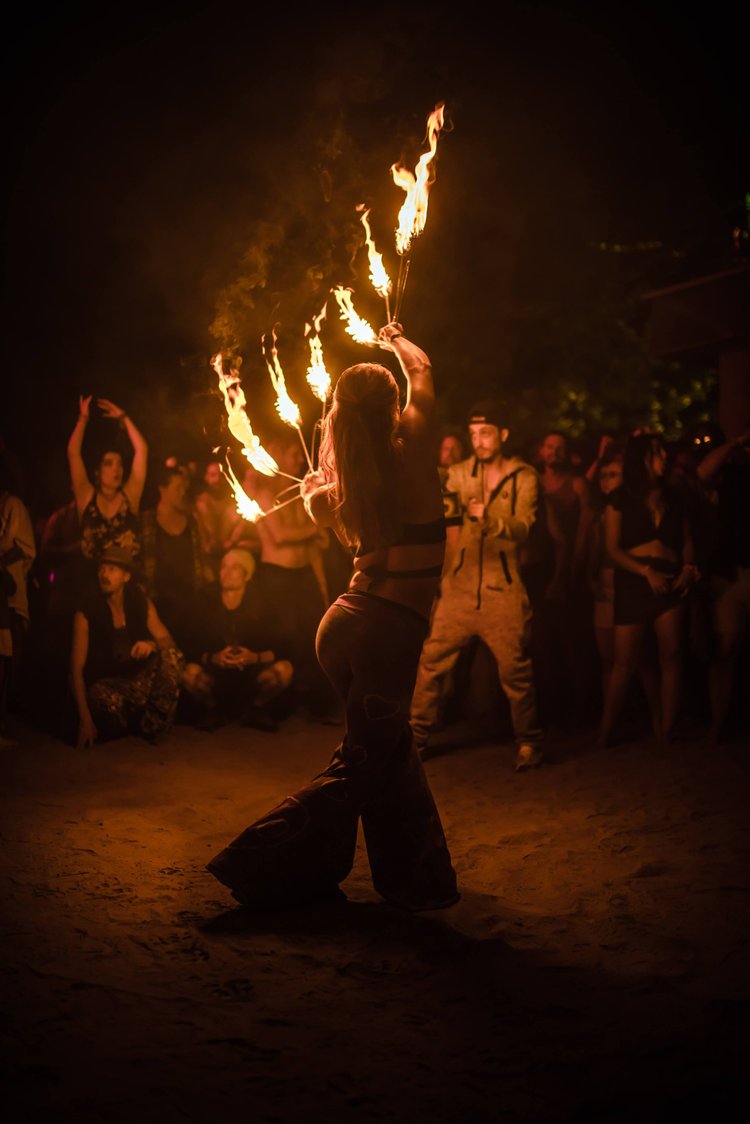
Sonic Springs returns to Fishers’ Paradise from August 13 to 17, 2026 with its most recognizable lineup yet. Justin Martin, DEF3, Hatiras and SOOHAN lead a bill that reaches beyond the regional circle that helped the festival grow. The official pitch still starts with a boutique gathering of hundreds beside the Sturgeon River.
The fifth anniversary arrives with a test
A festival that had to find its home
Sonic Springs did not begin with an effortless annual run. The project was being planned before the 2020 pandemic interrupted its launch, and the first clearly documented physical edition followed in 2022 at Eden Springs near Paisley. It moved to Hidden Valley Campground in 2023, then arrived at Fishers’ Paradise in 2024. For a young camping festival, three settings in three editions made the search for home part of the story.


Fishers’ Paradise brought a river and sandy beach into the experience, with forest campsites farther from the centre and a sauna waiting at the water. It also moved Sonic Springs north, into a site where damp nights, long gear carries and weak reception are physical facts. Get that email inbox clean before you arrive!
Fishers' Paradise already had a cultural memory
Sonic Springs did not create that map from bare ground. The venue’s facilities record credits the Fisher family and River & Sky festival (happening in late July) with years of work (it’s on it’s 8th edition). And it names the outdoor kitchen, beach sauna and cob ovens as their collaboration.
The two festivals give the property different uses. River & Sky features live bands, workshops and an indie camping tradition. Sonic Springs brings electronic music and ecstatic-dance circles. And its wellness program joins movement and inward practice. Their coexistence is evidence that festival identity does not reside in scenery alone. It comes from the relationships a program asks people to form with the same beach, trails and shared facilities.
The founders are inside the program
Founder Drez Slezak performs as Astrl Trvlr and co-founded Sonic Yoga. Public profiles identify Jesse Buck and Katt Brooks as co-founders whose work extends through cacao gatherings, ecstatic dance and yoga. Katt’s current festival profile connects her teaching to movement, breath, visualization and meditation. These are not unrelated side projects. They help explain why the music and wellness programs share a synergy and an audience.
Founder-practitioners can give a small festival unusually coherent taste because the people selecting the program also understand how it is used. The same arrangement can concentrate authority. Sonic Springs does not publish enough about ownership or booking decisions to support claims of favouritism, and no evidence justifies one. The fair conclusion is narrower: its identity is inseparable from a small founder network, so the quality of that network’s judgment carries unusual weight. And when done well, it tends to bring the magic of a festival much closer to feeling magical.
What growth changes
The 2026 headliner announcement gives people outside that network a clear way in. Someone may arrive for Justin Martin or Hatiras and discover that the sauna, workshops and river take their attention for as much of the weekend as the stage. That exchange can keep a festival alive: a stronger lineup attracts attention, while the site gives the new audience a reason to understand the event on its own terms.
There is no independently verified attendance history or published final capacity for 2026. The official site calls Sonic Springs boutique and describes a gathering of hundreds, which supports the scale claim without fixing a precise ceiling. The useful question is what the venue can hold socially. Can the crowd grow while one beach, forest campsites and a compact program still feel connected?
The answer depends partly on ordinary infrastructure. More attendees increase the load on water stations, washrooms and medical staff. Sonic Springs is candid about poor reception, no showers and forest campsites that can require a long carry.
Care becomes credible through systems
Some of the festival’s environmental commitments are already specific. Attendees are told to pack out their waste, use separated disposal stations and keep every kind of soap out of the river. The FAQ names a Green Team to explain the waste protocol. It also promises a 24-hour medical tent and a harm-reduction area.
Other parts remain difficult to assess from public information. Accessibility provisions are not clearly described. The medical and harm-reduction providers are unnamed. The all-ages policy sits beside adult wellness practices without a public schedule that explains age boundaries or zoning. None of those gaps proves that support is absent on site. It means the website cannot yet show how the promise works.
What Sonic Springs needs to preserve
Sonic Springs’ advantage is that the site can become familiar within a weekend. The beach has a daily rhythm. Forest paths lead back to recognizable camps. Music can move from house to bass to softer live performance without dividing the gathering into separate populations. The founders remain close enough to the program that their taste is visible rather than abstract.
The fifth anniversary does not need to prove that Sonic Springs can become much larger. It needs to prove that wider attention can deepen the weekend instead of diluting it. If current information becomes as deliberate as the program, if support is visible when people need it, and if the labour already embedded in the site is properly realized, growth can add stability without turning intimacy into a slogan.
More festival guides from Sparked Magazine
Festival guides, sound guides and practical planning notes from Sparked Magazine.


Continue Exploring
 Australia
Earth Frequency ’26 Sound Guide
A listener-first route through Earth Frequency’s current psychedelic, club, bass, funk and live programme—corrected for the latest lineup change and honest about the missing timetable.
Australia
Earth Frequency ’26 Sound Guide
A listener-first route through Earth Frequency’s current psychedelic, club, bass, funk and live programme—corrected for the latest lineup change and honest about the missing timetable. United States
Suwannee Hulaween ’26 Sound Guide
The 2026 bill is too mixed to reduce to headliners. A better route follows live improvisation, electronic scale, rhythm and the collaborations that blur those categories.
United States
Suwannee Hulaween ’26 Sound Guide
The 2026 bill is too mixed to reduce to headliners. A better route follows live improvisation, electronic scale, rhythm and the collaborations that blur those categories. Australia
How Dragon Dreaming Found Its Place
From a Canberra call for contributors to a lakeside home at Wee Jasper, Dragon Dreaming’s history reveals how an unusual festival learns to belong without becoming ordinary.
Australia
How Dragon Dreaming Found Its Place
From a Canberra call for contributors to a lakeside home at Wee Jasper, Dragon Dreaming’s history reveals how an unusual festival learns to belong without becoming ordinary.